QUIC is a Layer 4 transport protocol built on UDP. It provides TCP-like functionality while reducing latency and including encryption for secure connections. QUIC is a name, not an acronym; it originally stood for Quick UDP Internet Connections. section 22.2.3
QUIC matters because it combines characteristics associated with both major transport protocols:
- Uses UDP as its foundation. section 22.2.3
- Provides TCP-like functionality without requiring the same level of connection-establishment latency. section 22.2.3
- Includes encryption for secure connections. section 22.2.3
Practical use
QUIC is used for most connections from Chrome to Google web servers and for roughly 7% of websites. It is gaining popularity but is not identified as a CCNA exam topic here. section 22.2.3
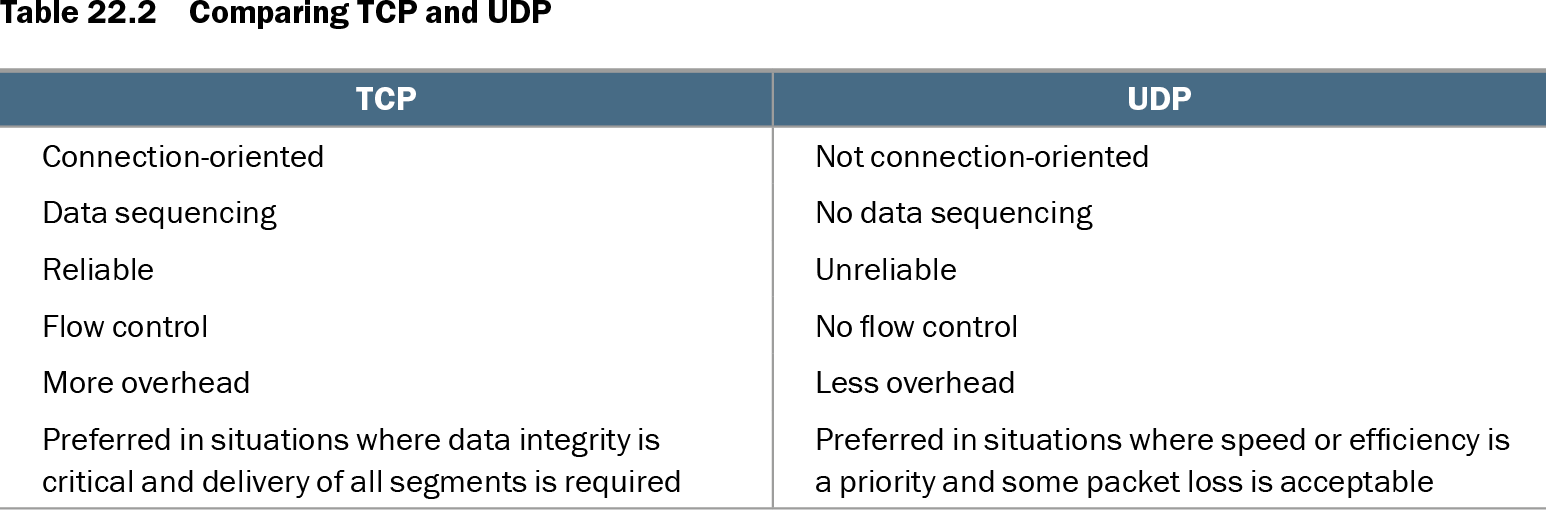
Table 22.2 Comparing TCP and UDP (view table figure)
| TCP |
UDP |
|---|---|
| Connection-oriented |
Not connection-oriented |
| Data sequencing |
No data sequencing |
| Reliable |
Unreliable |
| Flow control |
No flow control |
| More overhead |
Less overhead |
| Preferred in situations where data integrity is critical and delivery of all segments is required |
Preferred in situations where speed or efficiency is a priority and some packet loss is acceptable |
Compare QUIC’s UDP foundation with TCP’s connection orientation, sequencing, reliability, flow control, and overhead. section 22.2.3