Ragas
Ragas is an open-source framework and Python library for evaluating retrieval-augmented generation systems and applications.

Retrieval Augmented Generation, The Foundational Ideas
RAGAS is a framework for evaluating retrieval-augmented generation systems with metrics including faithfulness, answer relevance, and context relevance.
- How it is used
- Diagnoses whether a RAG quality problem lies in retrieved context, unsupported generation, or an answer that misses the query.
- How deep it goes
- Works through all three scores and shows library calls, then qualifies their reliability rather than treating scores as definitive.
- Examples
- Uses a financial-services reapplication query and a grounded-versus-fabricated answer comparison to expose disagreement between metrics.
- What you can do after
- Apply it via Ragas to score query–context–response triples and investigate which pipeline stage needs attention.
Read how Retrieval Augmented Generation, The Foundational Ideas explains Ragas →
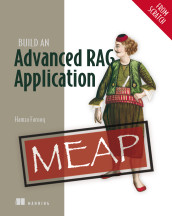
Build an Advanced RAG Application (From Scratch)
RAGAS is an evaluation framework for assessing retrieval-augmented generation systems at the component level, including retrieval and response quality.
- How it is used
- Evaluates RAG pipelines component by component to measure retrieval quality, grounding, response relevance, and overall performance.
- How deep it goes
- Defines four metrics and a composite score, using LLM-based assessment without requiring human-annotated ground truth.
- Examples
- Uses retrieved chunks, generated responses, artificial questions, and composite scores as evaluation artifacts.
- What you can do after
- Evaluate RAG configurations and track improvements using component metrics and a composite RAGAS score.
Read how Build an Advanced RAG Application (From Scratch) explains Ragas →
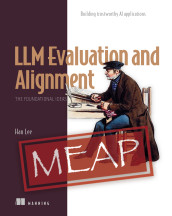
LLM Evaluation and Alignment, The Foundational Ideas
RAGAS is an open-source framework for evaluating retrieval-augmented generation systems with metrics such as faithfulness.
- How it is used
- Diagnoses whether RAG failures originate in retrieval, generation, or their interaction.
- How deep it goes
- Defines four metrics and their diagnostic combinations, while deferring each metric's full measurement methodology.
- Examples
- Uses a financial research assistant, earnings-report claims, hallucinated business details, and high-low metric combinations.
- What you can do after
- Diagnose/debug with faithfulness, answer relevance, context recall, and context precision before selecting retrieval or generation fixes.
Read how LLM Evaluation and Alignment, The Foundational Ideas explains Ragas →

Building Reliable AI Systems
RAGAS is an open-source framework for evaluating retrieval-augmented generation systems.
- How it is used
- Evaluates retrieval-augmented generation systems within a Python evaluation pipeline.
- How deep it goes
- Demonstrates dataset loading and metric configuration, but does not explain metric internals.
- Examples
- Uses the Amnesty QA dataset with a column map, GPT-4o-mini, and OpenAI embeddings.
- What you can do after
- Apply Ragas to evaluate a dataset using selected metrics, an LLM, embeddings, and mapped fields.
Also covered in
What to know first
- precisionPrecision is the proportion of items predicted, selected, or retrieved as positive that are correct or relevant.
- hallucinationA hallucination is model-generated content that is false, fabricated, or unsupported by relevant evidence but presented as plausible or factual.
- similarity searchSimilarity search is a retrieval technique that finds or ranks items by their similarity to a query, often by comparing feature or vector representations under a similarity or distance measure.
- language modelA language model is a computational model that represents patterns in linguistic sequences to assign probabilities, predict, generate, or evaluate language.
Related concepts
- fidelityuses · Fidelity is the degree to which an output, model, or representation accurately reflects or is supported by its relevant source, target, evidence, or behavior.
- relevancehas part · Relevance is the degree to which information, a result, or a response pertains to a query, task, purpose, or information need.
- language modeluses · A language model is a computational model that represents patterns in linguistic sequences to assign probabilities, predict, generate, or evaluate language.
- retrieval-augmented generationmeasures · Retrieval-augmented generation is a technique that retrieves relevant information from external sources and supplies it as context to a generative model when producing an output.
- synthetic dataproduces · Synthetic data is artificially generated data designed to represent selected characteristics, scenarios, or distributions of a target domain or process.
Questions about Ragas
What is Ragas?
Ragas is an open-source framework and Python library for evaluating retrieval-augmented generation systems and applications.
Which Manning books explain Ragas?
Retrieval Augmented Generation, The Foundational Ideas, Build an Advanced RAG Application (From Scratch), LLM Evaluation and Alignment, The Foundational Ideas and Building Reliable AI Systems.
What should I know before learning Ragas?
Manning books that teach Ragas usually introduce precision, hallucination, similarity search and language model first.
What are the parts of Ragas?
Ragas includes relevance.
What is Ragas also called?
Ragas is also called Retrieval-Augmented Generation Assessment.
These guides are generated from the text of Manning books by Manning's knowledge graph and link to the sections they draw on. The full books are available on liveBook and at manning.com.