liveBook · Manning

Range

As explained in Geometry for Programmers

The range of a function is the set of output values that the function actually produces.

The range of a function is the set of output values it actually produces. It can be smaller than the codomain: sine accepts every real input, but its outputs stay within [-1, 1]. section 2.4.1

Keep the terms separate: the domain contains possible inputs, the codomain describes the output set or type, and the range records the outputs reached by the function. section 2.4.1

Sine function

For y = sin(x), the domain and codomain are ℝ, while the range is [-1, 1]. Values outside that interval have no corresponding input. section 2.4.1
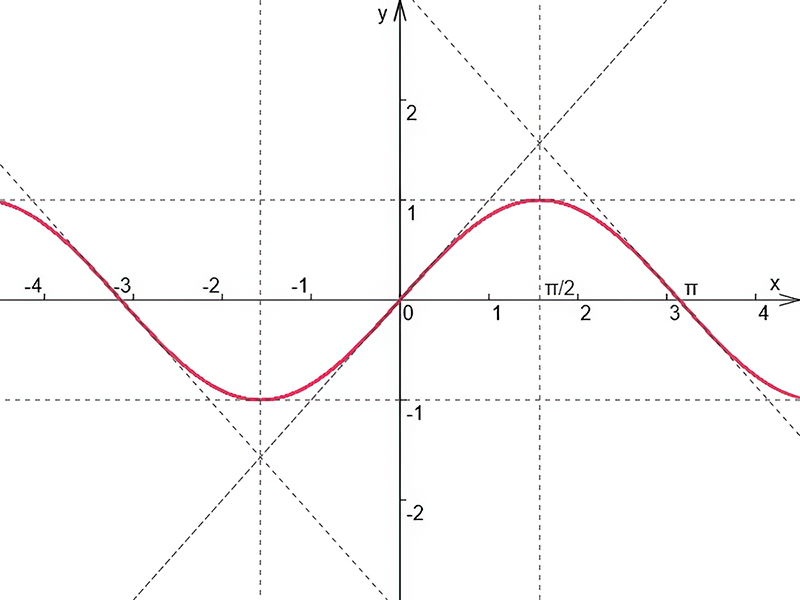
Figure 2.20 The sine function: y = sin(x)
02-20

Use the sine graph to see geometrically how every real input maps to an output within the bounded range [-1, 1]. section 2.4.1

How Geometry for Programmers covers it

How deep it goes
Defines range through sine and contrasts it with codomain, without developing computational methods or formal proofs.
Examples
Uses the sine function and its graph, with range [-1, 1], to illustrate reached outputs.
What it assumes
Assumes basic intuition about functions and introduces domains, codomains, and relations through the sine example.
What you can do after
Evaluate/understand whether a function’s actual outputs fill its codomain or occupy a smaller set.
How it connects
Connects range with functions, relations, domains, codomains, and the sine function.

Related concepts

This explainer was generated by Manning's knowledge graph from the text of Geometry for Programmers. The section links point to the parts of the book it draws on.