A measurement scale is a set of response options used to express the degree of a characteristic or judgment. In a survey, the scale helps turn a subjective experience, such as stress or customer sentiment, into data an analyst can compare. It is only one part of measurement: first define what you want to know, then choose or develop a scale that fits it and test whether the resulting measure remains accurate and stable. section 6.1 section 6.2.2
When designing or reviewing a rating scale, check the question as well as the response options:
- Use precise wording. An ambiguous question can leave respondents answering different interpretations. section 6.2.2
- Avoid leading language that suggests a desired answer, and separate distinct ideas rather than asking about both at once. section 6.2.2
- Test changes in wording, presentation, and response format. Small variations can substantially change self-reported answers. section 6.2.2
Figure 6.6 Varying methods of presenting the same response format
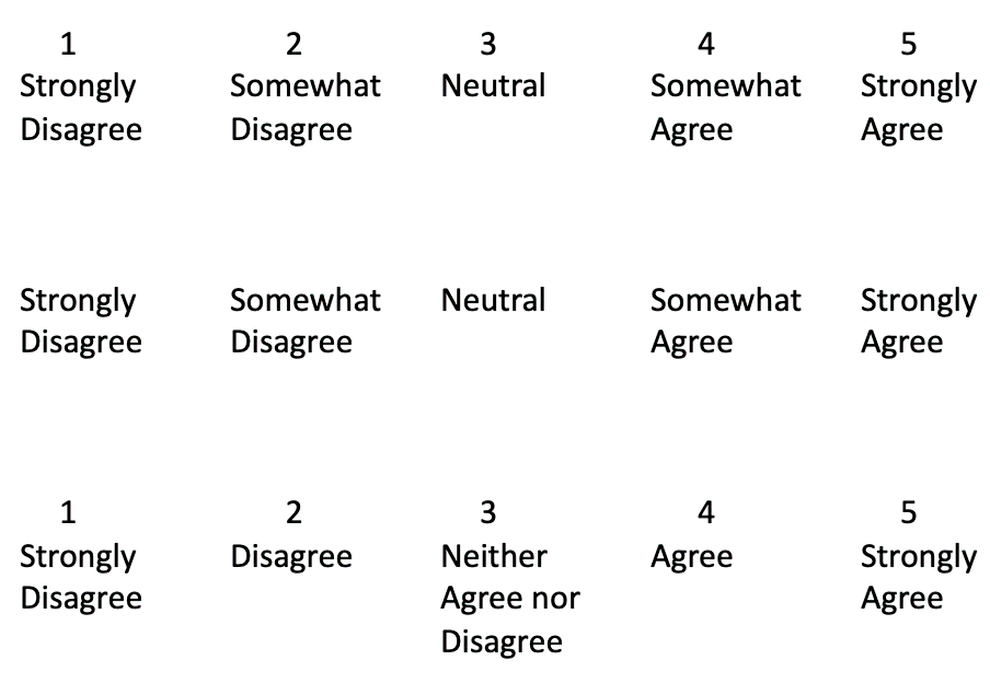
Compare ways of presenting the same response format; presentation is a design choice worth testing, not a neutral wrapper. section 6.2.2
An 11-point customer rating
Net promoter score (NPS) uses a 0–10 rating of likelihood to recommend, anchored by “not at all likely” and “extremely likely.” Responses are grouped as promoters, passives, or detractors; the percentage of detractors is subtracted from the percentage of promoters. The standardized score is easy to benchmark, but one question cannot explain the reasons behind a rating or fully capture customer experience, satisfaction, and loyalty. section 6.1.2
Treat the chosen scale as a claim about what the answers represent, not proof that the underlying concept has been captured. Before using the results for a decision, review the scale’s limitations and whether respondents can answer the question accurately. section 6.1 section 6.2.2
