liveBook · Manning

Reactive measure

As explained in Data-Driven Cybersecurity

A reactive measure is a cybersecurity action taken after an incident to limit damage and restore normal operations.

A reactive measure is a cybersecurity action taken after an incident to limit damage and restore normal operations. It forms one half of a balanced incident response approach alongside proactive prevention. section 9.1

Common reactive measures include:

  • Containment, such as isolating compromised endpoints or blocking suspicious IP addresses. section 9.1
  • Forensic investigation, remediation, and post-incident review to understand the breach, restore operations, and strengthen future defenses. section 9.1

Automated containment

An endpoint detection and response system detects abnormal behavior, quarantines an infected system, or rolls back malicious changes. These actions reduce dwell time while recovery and later review proceed. section 9.1

Figure 9.1 Steps to develop a comprehensive incident response plan
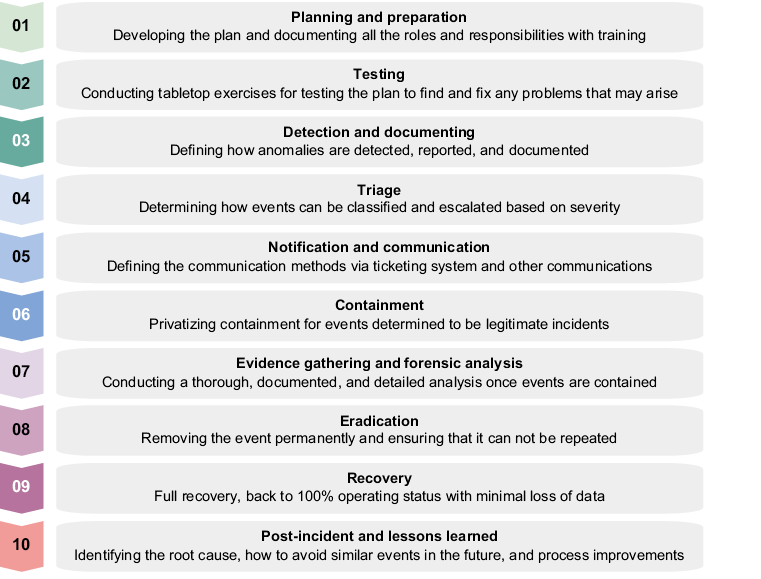
Use the incident response plan development steps to place containment, investigation, remediation, and review within an organized recovery process. section 9.1

How Data-Driven Cybersecurity covers it

How deep it goes
Defines the response category and names major actions but stops short of detailed operational procedures.
Examples
Uses endpoint isolation, suspicious-IP blocking, malicious-change rollback, system quarantine, and post-incident review as examples.
What it assumes
Assumes familiarity with cybersecurity incidents while distinguishing post-incident response from proactive prevention.
What you can do after
Apply reactive measures through an incident response plan to contain compromise, support recovery, and improve future defenses.
How it connects
Connects incident management with proactive measures, containment, forensic investigation, remediation, and post-incident reviews.

Related concepts

This explainer was generated by Manning's knowledge graph from the text of Data-Driven Cybersecurity. The section links point to the parts of the book it draws on.