A real-time clock (RTC), also called a CMOS clock, is a battery-powered hardware clock embedded in a computer’s motherboard. It maintains calendar time while the computer is powered off. When the system boots, the operating system takes over timekeeping from the RTC and exposes system time to applications. section 9.1 section 9.3
Distinguish the RTC from other clocks in a computer:
- The real-time clock preserves calendar time while power is off. section 9.3
- The system clock is the operating system’s view of time and can jump when manually adjusted. section 9.3
- A steady clock is better for measuring durations because it increases monotonically, but it does not represent calendar time. section 9.3
Adding an RTC to a Raspberry Pi
A Raspberry Pi lacks a battery-supported real-time clock. Without network access, it starts with epoch time and cannot reliably timestamp data. The Cacophony Project added a Raspberry Pi Hat containing an RTC to its thermal-imaging device, allowing recorded footage to receive accurate timestamps offline. section 9.1
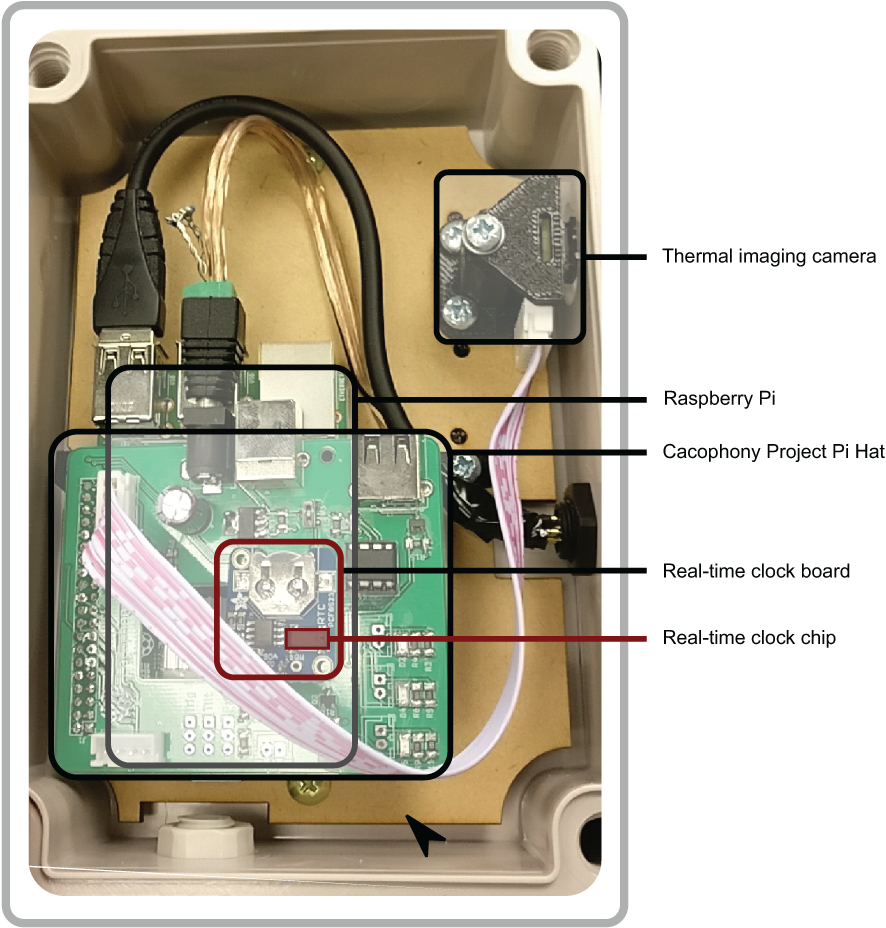
Inspect the prototype hardware that combines the Raspberry Pi with an additional real-time clock. section 9.1
