A record type defines the shape of a named domain record without storing the Runtime data itself. A Rental record type, for example, specifies data for an intended car rental; Runtime representations may include database tables, execution classes, or UI forms. section 1.2.1
Figure 1.10 Origin of the referenced rental period: the Rental record type
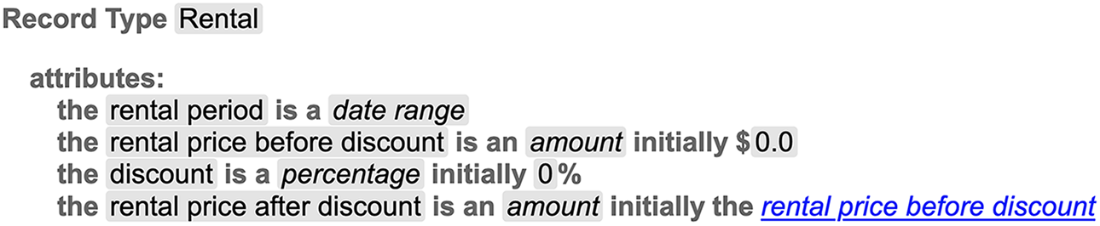
The Rental definition anchors referenced business data in a named record type and its attributes. section 1.2.1
A record type organizes related data through properties:
- Its name identifies the kind of record, such as Rental. section 1.4.2
- Its attributes property holds attribute instances; each attribute has a human-readable name, a type, and optionally an initial value. section 1.2.1 section 1.4.2
- Attribute types control stored values and their Runtime presentation and processing; illustrated types include date ranges, dollar amounts, and percentages. section 1.2.1
- A record type can later hold zero or more attached business rules through a business rules property. section 14.1.1
In the AST, a record type is an object whose settings include name and attributes. Relations are represented through settings: the attributes setting contains attribute objects rather than isolated data values. section 1.4.2
Projecting Rental
Render a Record Type AST object by displaying its name and mapping its attributes array to Projection calls. Begin with an HTML mockup, apply CSS for readable notation, then replace fixed content with JSX expressions derived from settings. section 4.2.1 section 4.2
To attach business rules, migrate existing Record Type objects so business rules is an array, project that array, and add new Business Rule objects through the record type interface. section 14.1.1

