liveBook · Manning

Redundancy port

As explained in Acing the CCNA Exam: Volume 2 Advanced Networking and Security

A redundancy port is a physical interface used to connect wireless LAN controllers in a redundant pair.

A redundancy port is a physical WLC interface used to connect two wireless LAN controllers and form a redundant pair. section 21.2.1 section 21.4

Redundancy ports are hardware-dependent: some WLC models include them, while others provide only console and distribution system ports. section 21.2.1

Figure 21.9 WLC ports and interfaces. Ports are physical connectors that connect to other devices, and interfaces are logical entities in the WLC.
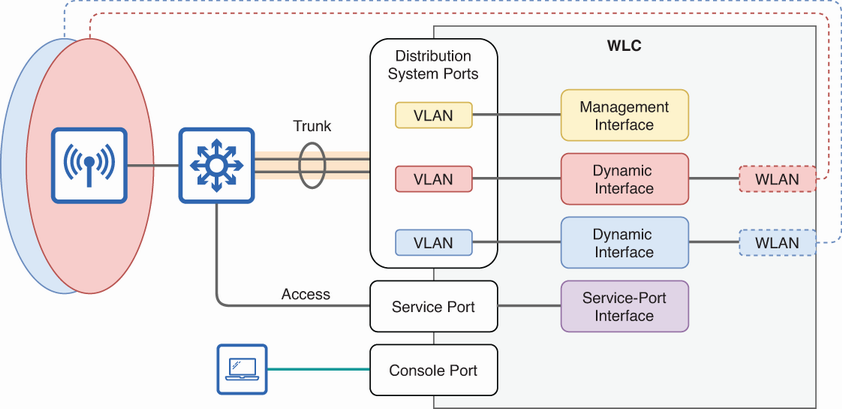
Use the port-and-interface diagram to distinguish this physical connector from logical WLC interfaces. section 21.2.1

How Acing the CCNA Exam: Volume 2 Advanced Networking and Security covers it

How deep it goes
Defines the port’s physical role and notes model availability, without detailing redundancy operation or configuration commands.
Examples
Uses a WLC port-and-interface diagram and contrasts models with and without redundancy ports.
What you can do after
Evaluate whether a WLC provides the physical connection required for a redundant pair.
How it connects
Relates physical ports to wireless LAN controllers, redundant pairs, and logical interfaces.

This explainer was generated by Manning's knowledge graph from the text of Acing the CCNA Exam: Volume 2 Advanced Networking and Security. The section links point to the parts of the book it draws on.