A reference clock is a highly accurate timekeeping source at the top of the Network Time Protocol (NTP) hierarchy. Atomic clocks and GPS clocks are typical examples. Reference clocks are stratum 0; NTP servers that synchronize directly to them are stratum 1 primary servers. section 2.2 section 2.4
Stratum describes an NTP server’s distance from a reference clock, not its physical location. Stratum 2 servers learn from stratum 1 servers, stratum 3 servers learn from stratum 2 servers, and so on. Devices prefer lower-stratum sources; stratum 16 is unreliable and is not used for synchronization. section 2.2 section 2.3.1
Use these operational distinctions when interpreting NTP deployments:
- Treat a primary NTP server as a device synchronized directly to a reference clock; treat secondary servers as both NTP clients and servers for downstream devices. section 2.2 section 2.4
- Read the ref clock column in show ntp associations to identify a server’s time source; .GOOG. indicates a vendor reference clock, while an IP address indicates another NTP server. section 2.3.1
- Use ntp master only as a local backup or deliberate primary source: it makes the router’s internal clock the reference source, which is less accurate than an external reference clock. section 2.3.2
Tracing a reference clock through NTP
A reference clock at stratum 0 feeds a primary NTP server at stratum 1. A router synchronized to that server reports stratum 2 with show ntp status. A downstream router synchronized to the first router reports stratum 3. In show ntp associations, the upstream server’s ref clock identifies the source one level above it. section 2.2 section 2.3.1
Figure 2.2 The NTP hierarchy. Reference clocks (stratum 0) are high-precision timekeeping devices such as atomic clocks. Stratum 1 NTP servers connect directly and sync to reference clocks. Stratum 2 NTP servers sync to stratum 1 NTP servers. Servers can peer with devices at the same stratum.
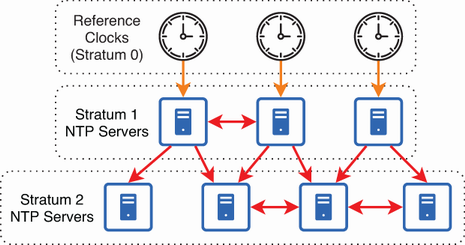
Use the NTP hierarchy diagram to trace reference clocks, primary servers, secondary servers, and same-stratum peer relationships. section 2.2
