liveBook · Manning

Regression test

As explained in Spring Start Here, Second Edition

Regression testing is repeated testing of existing functionality to verify that code changes have not broken it.

Regression testing means repeatedly testing existing functionality after code changes to check that it still works as expected. Changes made to fix bugs or add features can break capabilities that worked before. Running tests after changes helps catch problems before code reaches production. section 15.1

Figure 15.1 A CI tool, such as Jenkins, runs the tests every time a developer changes the app. If any of the tests fail, the CI tool notifies the developers to check which capability doesn’t work as expected and correct the problem.
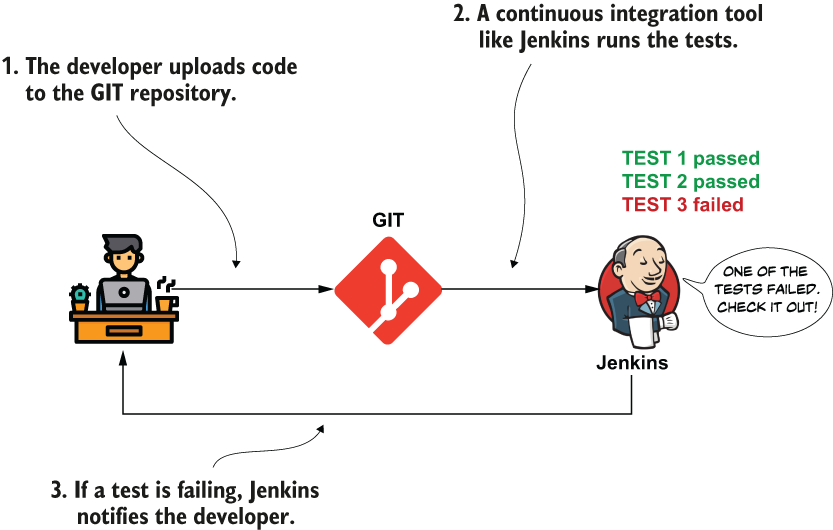
A CI tool can run tests whenever developers change the app and notify them when a test fails. section 15.1

How Spring Start Here, Second Edition covers it

How deep it goes
Defines repeated validation and describes CI automation, without detailing how to implement individual tests.
Examples
Uses tests for transferMoney() scenarios and CI builds that rerun tests after developer changes.
What you can do after
Operate Jenkins, GitLab Actions, or GitHub Actions to run tests on changes and notify developers of failures.
How it connects
Links regression testing to unit testing, continuous integration, and maintainability.

Also explained in

Compare how 3 books explain regression test →

Related concepts

This explainer was generated by Manning's knowledge graph from the text of Spring Start Here, Second Edition. The section links point to the parts of the book it draws on.
