Rendering is the browser’s translation of HTML tags and CSS properties into the visible layout of a web page on a device. section 1.1 section 1.4
Rendering connects a visitor’s request to the page they see:
- A web browser requests a page from a web server. section 1.4
- The server sends the HTML and CSS files to the browser. section 1.4
- The browser interprets the code and displays the resulting page. section 1.1 section 1.4
From plain text to a readable page
A browser can display a plain-text file, but HTML tags turn its text into structured paragraphs, lists, links, and other readable page elements. Rendering performs that visible transformation. section 1.1
Figure 1.4 To go from HTML and CSS to a web page, you send your code to a web server, and visitors use their web browsers to retrieve and render your code into a page.
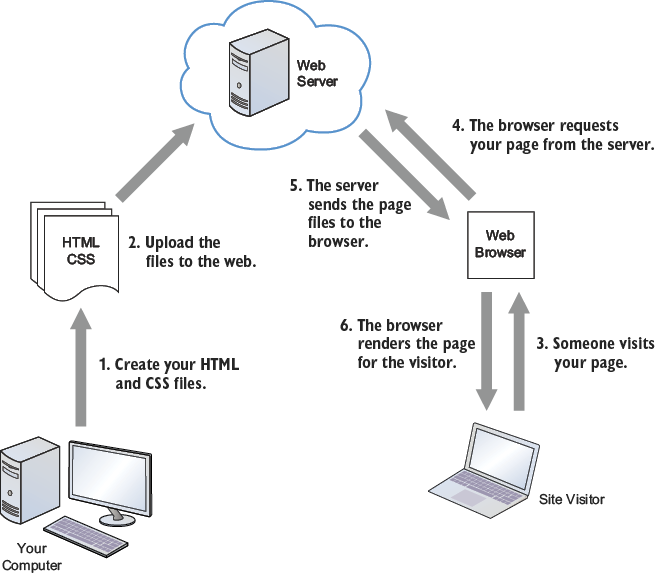
Trace the complete path from HTML and CSS files to a browser-rendered page. section 1.4