Calibration data is representative data whose relevant properties resemble the inputs and environment encountered in production. Models can make sense only of inputs similar to what they have seen. section 6.1.2
Collect calibration data with these practical rules:
- Collect data directly from the environment where the model will be used whenever possible. section 6.1.2
- Match the production population and input format rather than relying on a convenient but different dataset. section 6.1.2
- Treat high test-set accuracy as insufficient when the test data differs from real user inputs. section 6.1.2
Dish-recognition photos
A dish-recognition app trained on professional, well-lit social-network photographs achieved more than 90% test accuracy but failed on random restaurant photos from users’ smartphones. The training data was not representative of production data. section 6.1.2
“DEWEY DEFEATS TRUMAN”: a famous example of sampling bias
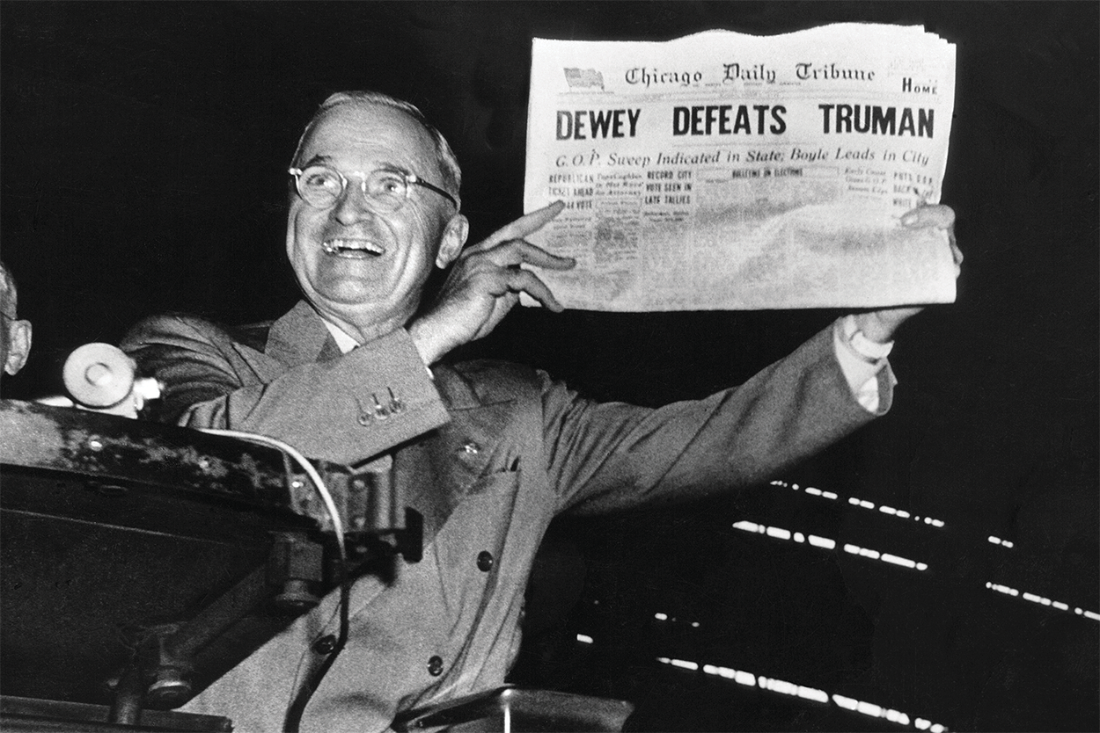
Use the sampling-bias example to connect representative-data requirements with misleading conclusions from poorly sampled data. section 6.1.2

