Requirements structure determines how intent is expressed for implementation. Natural-language user stories and acceptance criteria are approachable, but can leave behavior open to interpretation. Constrained grammars and machine-parseable formats can make decisions and missing details more visible, at the cost of readability or learning effort. section 3.6.1
Choose a structure with its consequences in view:
- Loose natural language may suit simple changes, but can leave failure paths, state changes, and expected outcomes undecided. section 3.6.1
- Structured requirements can reduce interpretation, while making authoring and review less approachable. section 3.6.1
Figure 3.6 Taxonomy of specification styles based on structure, location, granularity, and organization
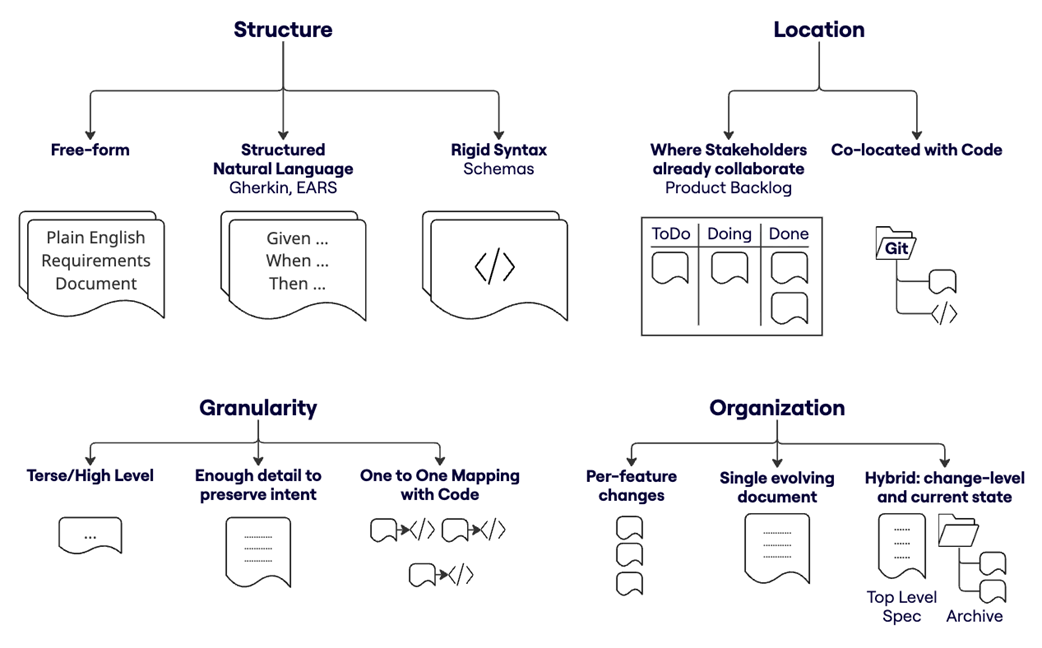
The taxonomy places requirement structure alongside specification location, granularity, and organization. section 3.6.1