Response bias is systematic distortion in survey answers caused by how questions, response formats, or rating scales are presented. Small design choices can produce different answers from the same people. section 6.2.2
Reduce response bias by checking for:
- Ambiguity, which can prompt inaccurate or inconsistent answers. section 6.2.2
- Leading language, which suggests a preferred answer or assumes agreement. section 6.2.2
- Double-barreled questions, which ask about distinct concepts but require one answer. section 6.2.2
- Variations in response formats and rating scales, which can substantially affect results. section 6.2.2
Software survey wording
“Do you like our software?” is ambiguous. “What aspects of our software do you find most helpful in your day-to-day work?” asks for a more specific assessment. Likewise, replace “Wouldn’t you agree that our software saves time and effort?” with a neutral agreement scale. section 6.2.2
Figure 6.7 How do you think the wording of these questions might affect the responses you receive?
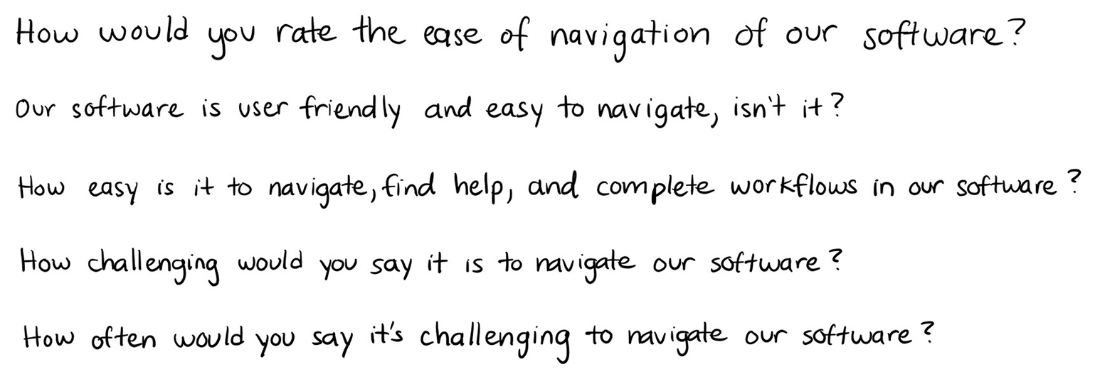
Compare alternative question structures and consider how wording changes the responses people provide. section 6.2.2
