Responsibility is a task or duty for which someone in a role is accountable. In leadership, responsibilities are what you must own and fulfill; expectations are the standards others hold for your behavior and performance. section 1.3
Lead-developer responsibilities commonly include:
- Support the whole team, not only developers, and build dependable working relationships. section 1.3
- Translate project-team requirements for developers while communicating clearly with marketing, QA, designers, and executives. section 1.3
- Delegate effectively instead of doing everything yourself; delegation develops teammates and protects time for competing priorities. section 12.2.3 section 10.5.4
- Give specific feedback and guidance rather than quietly redoing another person’s work. section 10.5.4
Responsibility in difficult conversations
When a client does not understand a technical explanation, the responsible response is to find another way to communicate the reasoning or solution. When a contract creates disagreement, return to the contract and original statement of work to realign expectations. section 8.5.4
Figure 12.4 Setting yourself up for success
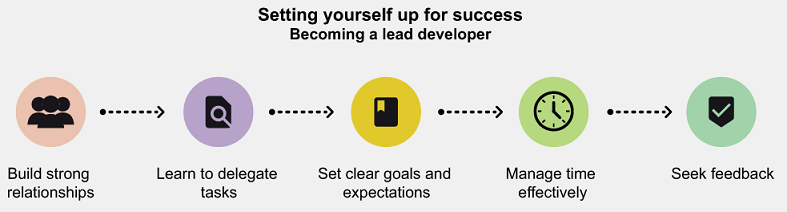
Use the success strategies as a checklist: build trust, clarify goals and roles, communicate regularly, seek feedback, delegate, and organize priorities. section 12.2.3
Responsibility grows with the role, but it does not require perfection. Try the leadership work, learn from mistakes, and keep improving how you support others. section 10.5.4
