REST APIs carry communication across process boundaries in microservice architectures. Choosing them affects availability, performance, and runtime coupling, so weigh those forces against alternatives such as asynchronous messaging. section 8.0
A REST API exposes endpoints with HTTP methods, parameters, and request and response bodies. At the HATEOAS level, a resource representation includes links for actions, such as canceling an order; clients can follow those links instead of hard-wiring URLs. section 8.2.2
OpenAPI provides a machine-readable API contract covering endpoints, methods, parameters, bodies, and authentication. Tools can use it to generate client SDKs, server stubs, documentation, and tests. Framework metadata can also generate the document, keeping it aligned with the implementation. section 8.2.2
Figure 8.5 An OpenAPI document describes a REST APIs endpoints including URL paths, HTTP methods, request and response bodies, and so on.
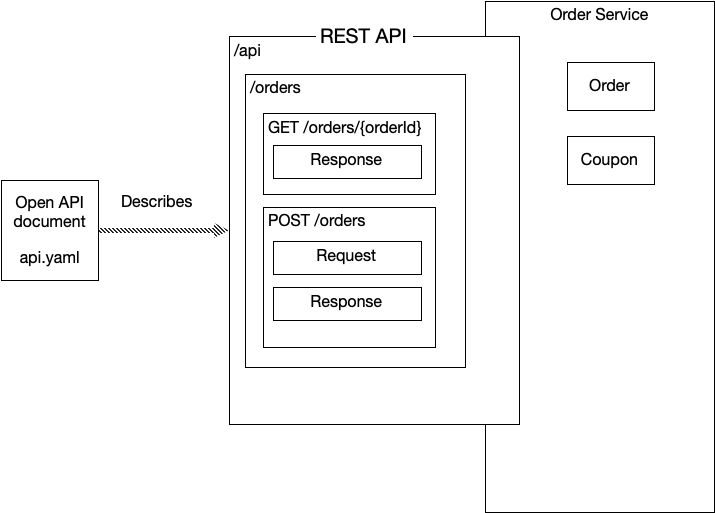
Use the diagram to see the endpoint, method, and request and response details represented in an OpenAPI document. section 8.2.2
Figure 8.6 A service must implement a breaking API change by supporting both the new and old versions of the API for the deprecation period. Clients that haven’t yet been updated can use the old version.
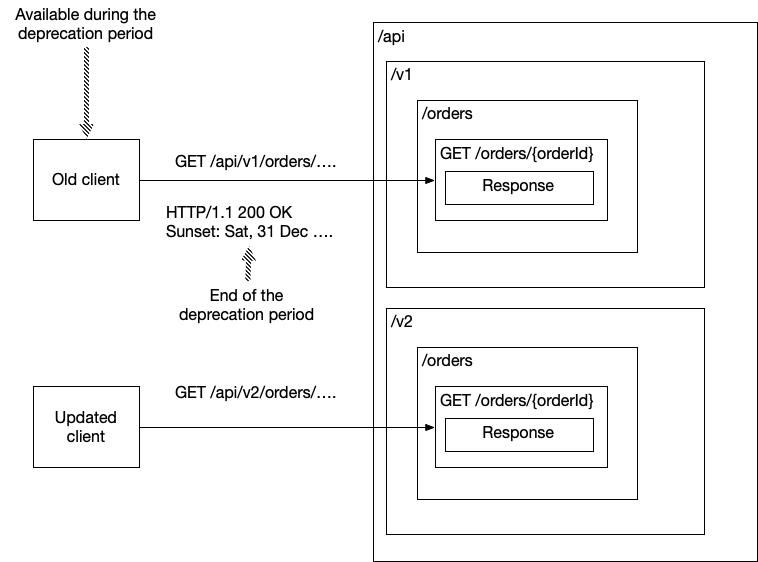
For a breaking API change, support old and new versions during deprecation so clients can migrate without an immediate cutover. section 8.2.2