A retention policy specifies how long stored data must remain available before deletion or archiving. Treating it as a paperwork detail can turn ordinary growth into a storage crisis. section 9.6
Mistake: sizing storage without retention
MarketingArchive receives 5 GB of data daily and retains it for three years. A database that appears to have 50 GB free can grow to about 1.78 TB after one year; adding TempDB, the transaction log, and safety headroom may require roughly 3.2 TB. If the SAN has only 2 TB available, the result can be a business dispute and extended downtime while new capacity is installed. section 9.6
Use the policy as an operational input:
- Calculate required data-file capacity from the daily ingestion rate and retention period. section 9.6
- Include TempDB, the transaction log, unexpected growth, and existing SAN commitments in the estimate. section 9.6
- Apply an appropriate retention policy to backups, and keep backups air-gapped or on immutable storage; encrypt them against cyberattacks. section 12.12
Figure 9.5 Linear growth pattern
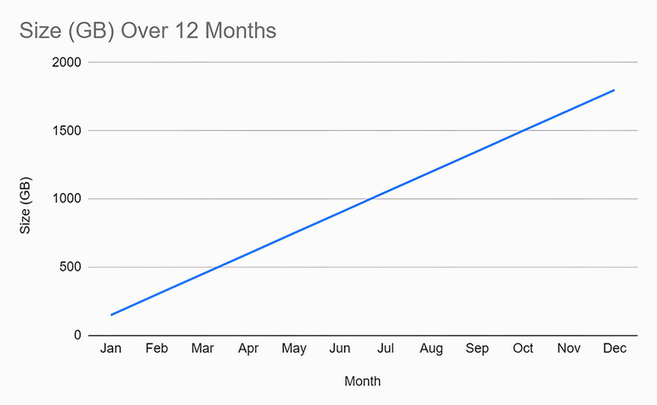
Use the linear-growth figure to visualize how a steady daily intake accumulates against the retention horizon. section 9.6









