liveBook · Manning

External configuration

As explained in Microservices Patterns, Second Edition

External configuration is a pattern in which runtime configuration is supplied from outside a software component instead of being hard-wired into it.

External configuration supplies runtime settings from outside a component instead of hard-wiring environment-specific information into it. This lets one built component be deployed across test, staging, and production environments. section 5.5.2

Database settings

Pass a database hostname and credentials to the component at runtime, for example through environment variables. section 5.5.2

Figure 5.19 The packaged component, which is built once by the deployment pipeline, can be deployed to multiple environments
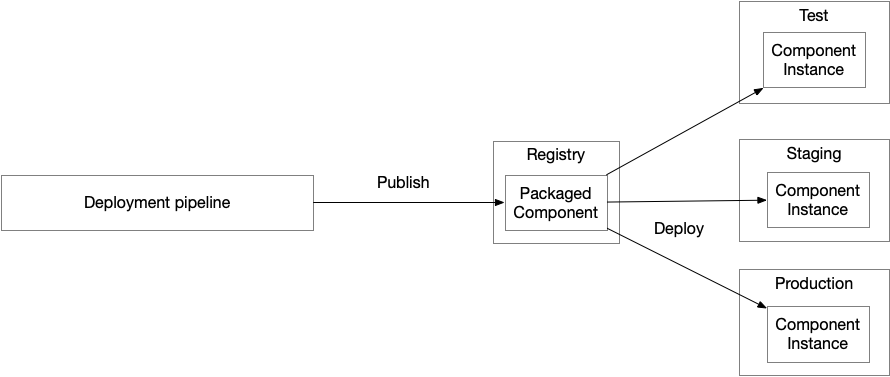
build once for multiple environments

Shows how one packaged component can be deployed to multiple environments. section 5.5.2

How Microservices Patterns, Second Edition covers it

How deep it goes
Motivates runtime configuration and gives an environment-variable example, while deferring detailed pattern mechanics.
Examples
Illustrates supplying a database hostname and credentials through environment variables.
What you can do after
Apply it by passing environment-specific settings at runtime and deploying the same component across environments.
How it connects
Connects runtime configuration with deployment pipelines and environment variables.

Related concepts

This explainer was generated by Manning's knowledge graph from the text of Microservices Patterns, Second Edition. The section links point to the parts of the book it draws on.