liveBook · Manning

Iceberg principle

As explained in Microservices Patterns, Second Edition

A software design principle in which an element exposes a small API relative to the larger implementation that it hides.

The iceberg principle keeps a software element’s API small and stable while hiding most of its implementation. When the API captures stable concepts, changes can stay localized; a mistaken stability bet can affect clients. section 4.2.4

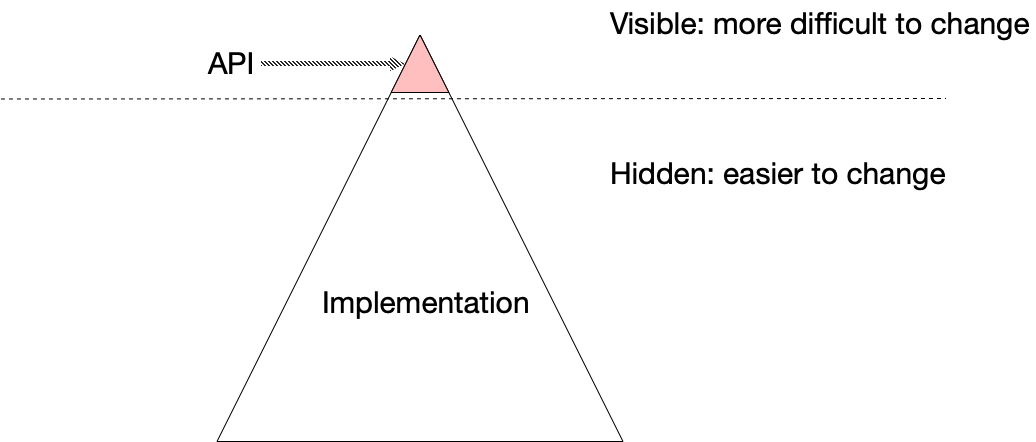
Figure 4.6 Software elements should resemble icebergs: most of the implementation should be hidden by a small, stable API
iceberg elements

The figure shows the intended balance: a small, stable API above a larger hidden implementation. section 4.2.4

How Microservices Patterns, Second Edition covers it

How deep it goes
Defines the API-versus-implementation shape and links stability bets to localized changes or client impact.
Examples
Illustrates software elements as icebergs, with most implementation hidden behind a small, stable API.
What you can do after
Evaluate API boundaries by deciding which concepts are stable enough to expose and which implementation details to hide.
How it connects
Connects API stability, implementation changes, and design-time coupling.

Related concepts

This explainer was generated by Manning's knowledge graph from the text of Microservices Patterns, Second Edition. The section links point to the parts of the book it draws on.