liveBook · Manning

Ride-sharing problem

As explained in Optimization Algorithms: AI techniques for design, planning, and control problems

A transportation assignment problem that matches passengers and drivers and orders passenger trips across a vehicle fleet under multiple objectives and constraints.

The ride-sharing problem assigns passengers with predefined pickup and drop-off points to pay-per-use vehicles, while ordering each driver’s trips. It is a multi-objective constrained optimization problem whose solutions must balance quality with rapid response. section 2.1.5

Typical optimization goals include:

  • Minimize driver and passenger travel distance, travel time, trip cost, waiting time, and the number of drivers required. section 2.1.5
  • Maximize matched requests and driver earnings. section 2.1.5
  • Trade optimality for speed when assignments must be produced within seconds or minutes; slow solutions can increase operating costs and lose business. section 2.1.5
Figure 2.14 Ride-sharing problem—this planning problem needs to be solved in a shorter amount of time, as delays could mean lost trips and a bad user experience.
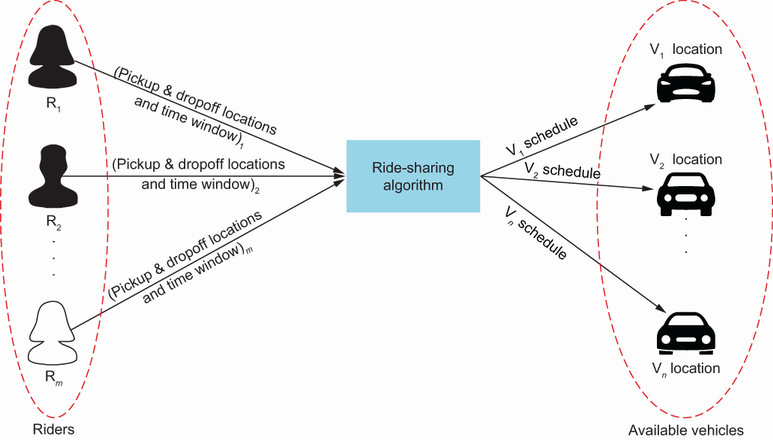
Use the figure to connect assignment quality and response time with delayed trips and degraded user experience. section 2.1.5

How Optimization Algorithms: AI techniques for design, planning, and control problems covers it

How deep it goes
Defines objectives and operational trade-offs but stops short of specifying an assignment algorithm or implementation.
Examples
Uses a fleet of pay-per-use vehicles, predefined passenger stops, ordered driver trips, and a ride-sharing planning figure.
What you can do after
Evaluate ride-sharing objectives and recognize when fast approximate assignments matter more than fully optimal solutions.
How it connects
Connects ride-sharing with constrained optimization, multi-objective optimization, assignment, and planning problems.

Related concepts

This explainer was generated by Manning's knowledge graph from the text of Optimization Algorithms: AI techniques for design, planning, and control problems. The section links point to the parts of the book it draws on.