A risk model answers “What are we protecting from?” by describing the worst scenarios, limitations, and undesirable consequences a system should prevent or mitigate. Replace vague goals such as “incorrect model prediction” with detailed scenarios aligned across stakeholders. Treat these risks as nonfunctional requirements: they shape how the system must operate, not merely what it should do. section 2.3
Dynamic pricing
A technically sophisticated pricing algorithm optimized revenue, margin, or traffic in real time. Risk analysis changed the design because identical items could not receive different prices for people in the same city when sold online, even though location-based differences were acceptable. The lesson is practical: examine consequences and constraints before celebrating an algorithmic design. section 2.3
Initial design for the dynamic pricing system
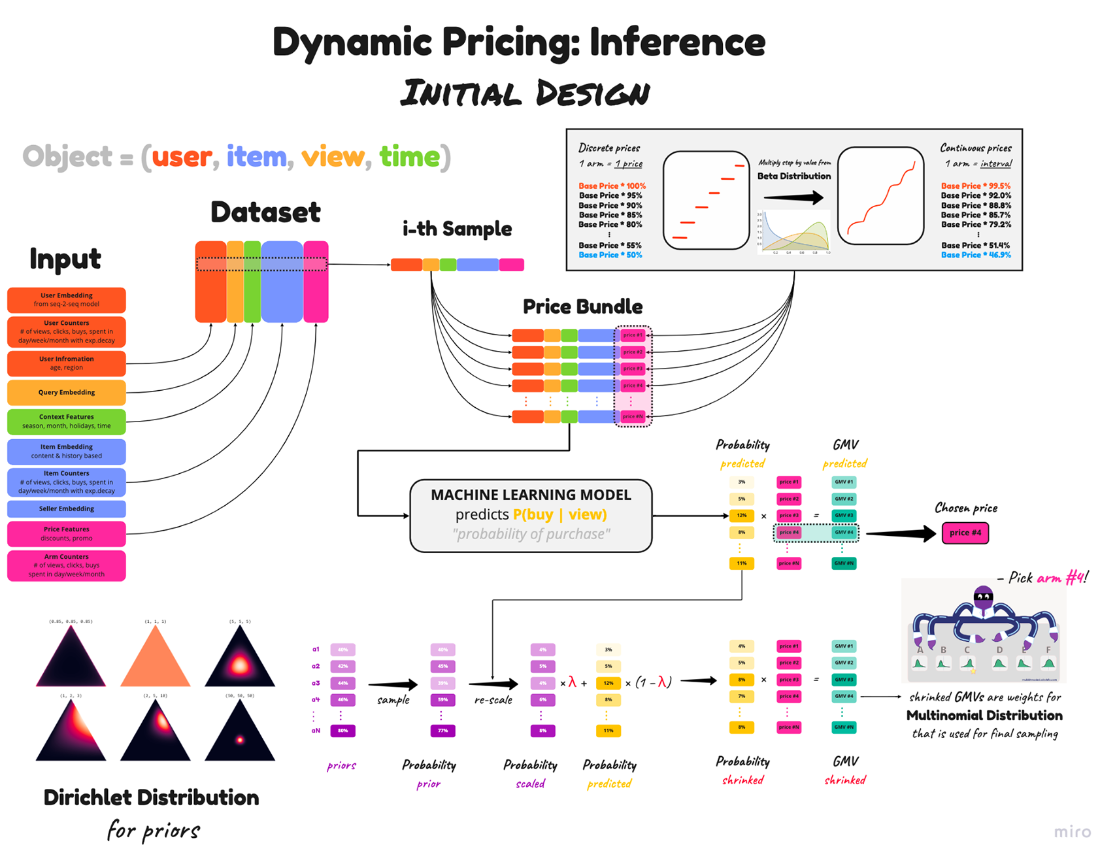
Compare the initial pricing-system design with the final design to see how identified risks and limitations reshape an apparently capable solution. section 2.3
