liveBook · Manning

Risk storming

As explained in Architecture Modernization: Socio-technical alignment of software, strategy, and structure

Risk Storming is a collaborative technique for identifying and assessing significant risks and constraints in an architecture.

Risk Storming is a collaborative technique for identifying significant architectural challenges and constraints, especially those that could obstruct future business outcomes. section 4.3.2

Run the technique by:

  • Creating architectural diagrams first, typically C4 context and container diagrams. section 4.3.2
  • Overlaying risks as sticky notes, contributed by people who know the represented architecture best. section 4.3.2
  • Assessing each risk with probability and impact scores from 1 to 3, then multiplying the scores. section 4.3.2
  • Treating scores of 6 or above as major red risks, scores under 3 as low green risks, and intermediate scores as amber. section 4.3.2

Holiday booking architecture

A container diagram exposes risks including business logic embedded in stored procedures, alongside a monolithic legacy database coupled to almost everything and current hotspots that may not scale with target business outcomes. section 4.3.2
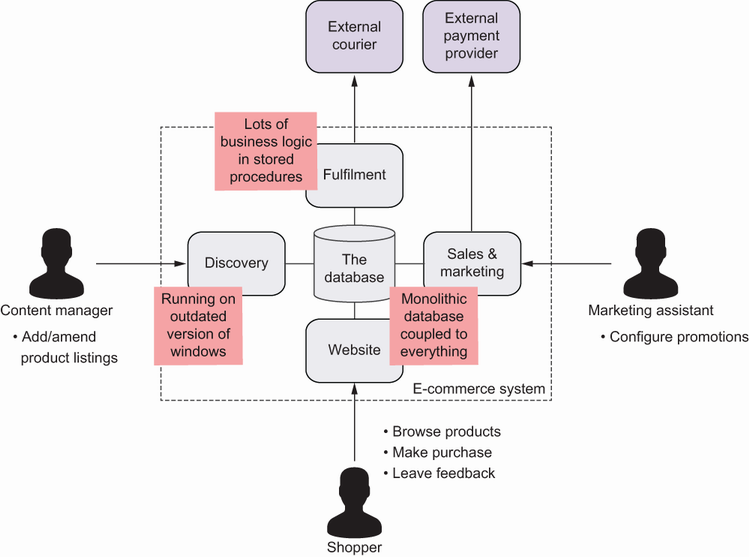
Figure 4.4 A C4 container diagram with multiple risks identified

Use the C4 container diagram to see how multiple architectural risks can be overlaid and assessed in context. section 4.3.2

How Architecture Modernization: Socio-technical alignment of software, strategy, and structure covers it

How deep it goes
Explains diagram preparation, collaborative risk annotation, and 1–3 probability-impact scoring, but does not prescribe remediation.
Examples
Uses a holiday booking container diagram, stored-procedure business logic, legacy database coupling, and non-scalable business hotspots.
What it assumes
Assumes an architectural diagram and access to people with detailed knowledge of the represented system areas.
What you can do after
Evaluate architectural risks collaboratively, rank their priorities, and connect them to modernization decisions.
How it connects
Connects architectural diagrams, C4 diagrams, architecture modernization, business strategy, and target business outcomes.

Related concepts

This explainer was generated by Manning's knowledge graph from the text of Architecture Modernization: Socio-technical alignment of software, strategy, and structure. The section links point to the parts of the book it draws on.