A risk tier classifies an AI system under the EU AI Act according to what it does. Releasing a feature, directing a system toward a new decision, or changing its model can shift its classification and obligations. section 7.7
Use the system’s function to distinguish its risk tier:
- The categories are minimal risk, limited risk, high risk, and systems banned outright. section 7.7
- Systems that interact with people or generate content are at least limited risk; pure background systems without human-facing output, such as data-cleaning pipelines, are minimal risk. section 7.1
- Keep classification distinct from organizational role: providers build systems, while deployers operate them, and each role carries different obligations. section 7.7
Employee-facing AI and background processing
An AI tool used by employees still falls at least into limited risk if it interacts with them or generates content. A data-cleaning pipeline with no human-facing output is minimal risk. section 7.1
Figure 7.1 A GenAI system can pass every security and privacy certification and still produce harmful outputs. Governance must check what the system does, not only how it is built.
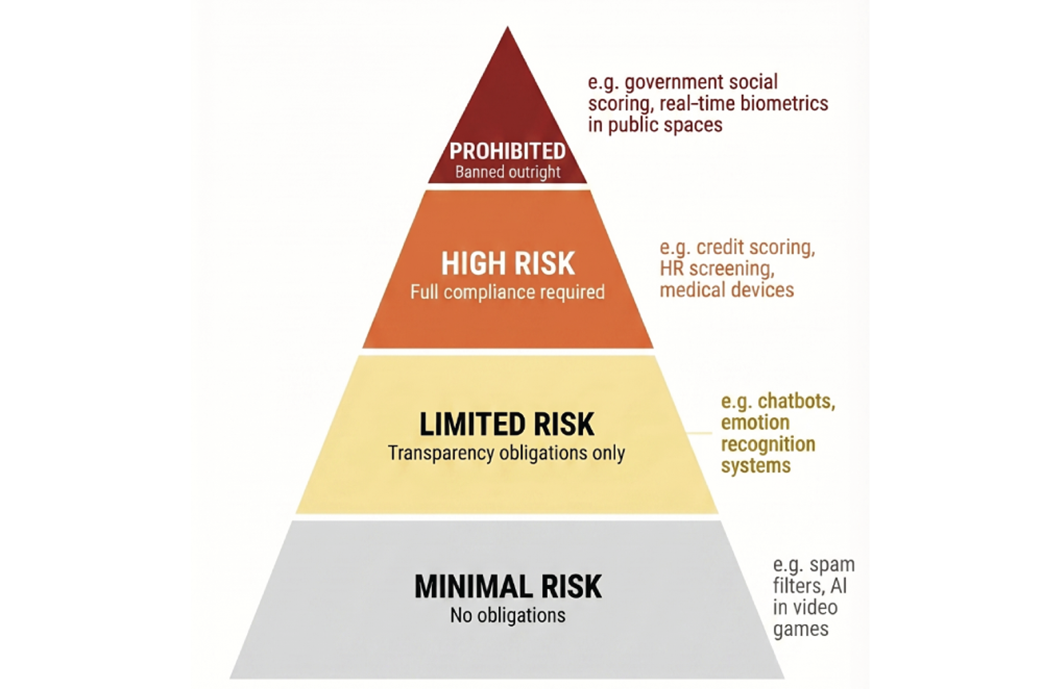
Risk classification should consider what a system does, not only whether it meets security and privacy requirements. section 7.1

