A saga instance is the runtime record for one saga execution. It is initialized with request parameters, invoked to execute its first state, and persisted by the orchestration service. section 10.2.4
In request/asynchronous-response orchestration, the instance participates in this cycle:
- A reply identifies the instance by saga ID; the orchestrator loads and invokes it, transitions it to the next state, runs that state’s entry action, and persists it again. section 10.2.4
- The cycle repeats until the saga completes. The Transaction outbox sends command messages, while the Idempotent consumer check detects duplicate replies. section 10.2.4
Figure 10.13 The state machine for a saga orchestrator that invokes the participants using request/asynchronous-response. The state entry actions send command messages. The state transitions are triggered by reply messages.
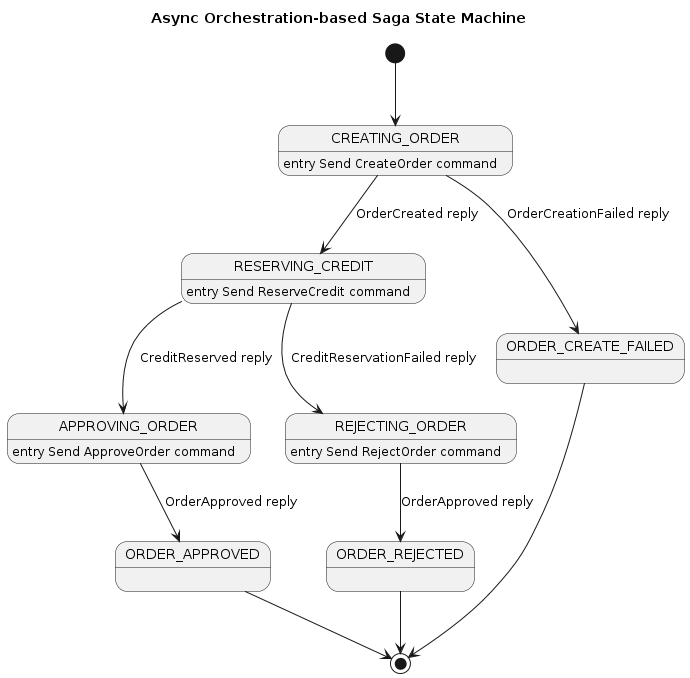
The state machine diagram shows how state entry actions send commands and reply messages trigger transitions. section 10.2.4
