Schedule compression shortens a project schedule without reducing scope. It is considered when deadline assurance matters, potentially at additional cost. section 13.4
Common schedule-compression approaches include:
- Fast-tracking: an identified compression technique for increasing the chance of meeting a deadline. section 13.4
- Crashing: an identified compression technique that may require additional cost while preserving scope. section 13.4
Automated reporting tool project
A project estimated at 29 weeks with a 30-week deadline has a substantial completion probability. Fast-tracking or crashing could further increase the probability of meeting that deadline. section 13.4
Figure 13.5 Normal probability distribution of project completion time, where the mean duration is 29 weeks and the standard deviation is 1.41 weeks. The due date of 30 weeks is marked, showing a 78.5% probability (using the z-table results) of completing the project within this timeframe.
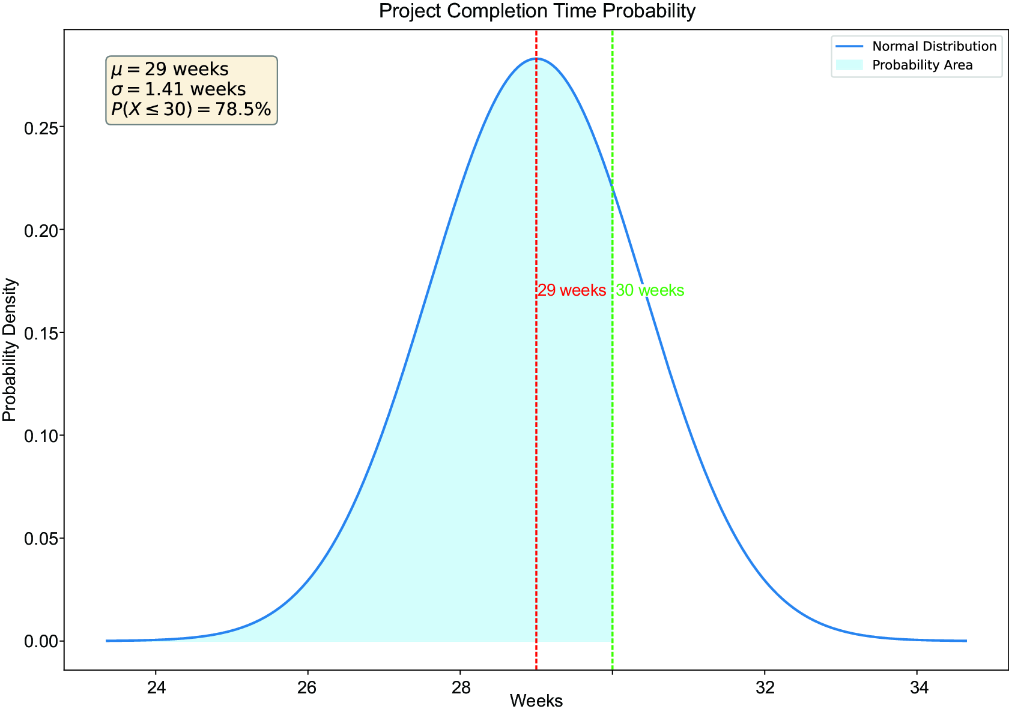
Use the probability-distribution figure to relate project duration, the 30-week due date, and the potential value of schedule compression. section 13.4
