A scheduling algorithm decides which job the operating system selects from the ready queue when execution can move to another task. It helps share CPU time among competing jobs, even on a single processor. section 2.1
A typical scheduling cycle looks like this:
- A timer tick, completed I/O operation, or software interrupt pauses the current job. section 2.1
- The operating system returns the paused job to the ready queue. section 2.1
- The algorithm selects another ready job, while a context switch saves and later restores execution state. section 2.1
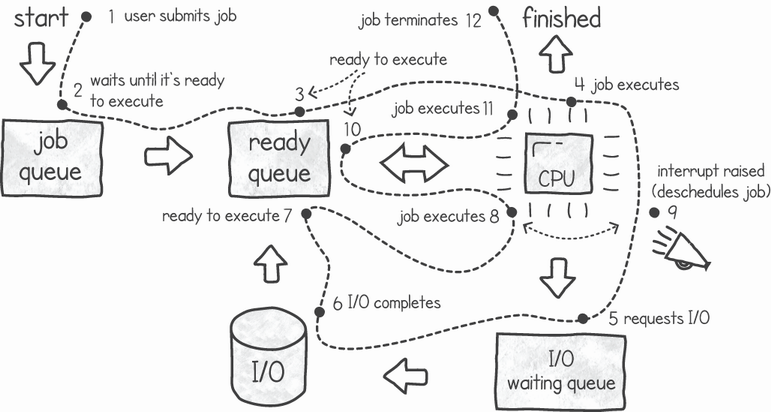
Trace how jobs move between operating-system states on a single-CPU system. section 2.1
