Imagine malware replacing the program that starts your computer. Secure boot prevents that first compromise from becoming an evil operating system by checking each boot stage before it runs. section 13.2.4
A hardware root of trust begins a verification chain:
- Immutable boot ROM prepares protected memory and loads the next boot program. section 13.2.4
- The ROM hashes the program and verifies its signature against a public key stored in the ROM. section 13.2.4
- Each trusted boot loader repeats the process until a verified loader starts the operating system. section 13.2.4
Unsigned updates
A phone can reject an operating-system update that lacks the vendor’s signature, because the boot chain cannot establish trust in it. section 13.2.4
Figure 13.3 A chip implementing the TPM 2.0 standard, plugged into a motherboard. This chip can be called by the system’s motherboard components as well as user applications running on the computer’s OS. Photo from Wikipedia (http://mng.bz/Q2je).
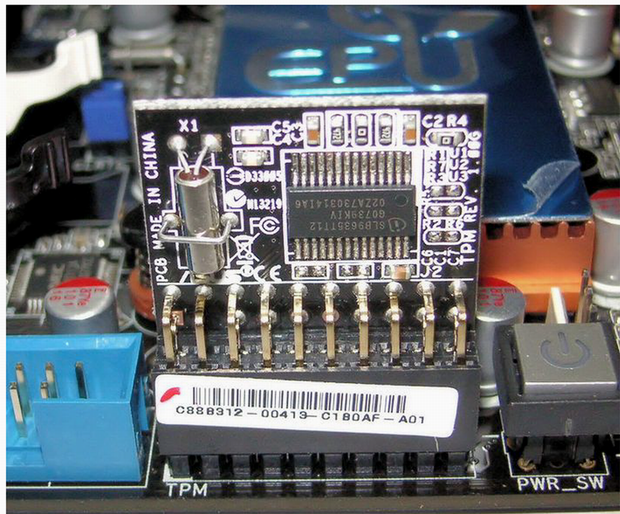
A TPM 2.0 chip illustrates the hardware foundation that supports secure boot and other trusted operations. section 13.2.4
