Security control
A security control is a safeguard, policy, procedure, or practice intended to prevent, detect, respond to, or reduce security risks to systems and information.
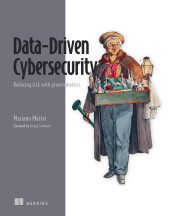
Data-Driven Cybersecurity
A safeguard, policy, procedure, or practice designed to prevent, detect, limit, or respond to cybersecurity risk and protect information systems.
- How it is used
- Uses controls to balance protection of critical assets against cost and to identify risk-management gaps.
- How deep it goes
- Defines control types and functions with examples, then illustrates framework assessment and metrics without detailing individual control implementation.
- Examples
- Illustrates functions with fences, cameras, and replacement access cards, and oversight with encryption compliance and gap-analysis coverage.
- What you can do after
- Evaluate/understand control coverage by classifying safeguards, relating gaps to risk, and checking whether identified gaps are closed.
Read how Data-Driven Cybersecurity explains security control →

Decision Engineering
A measure intended to mitigate a security threat or satisfy a security or compliance requirement.
- How it is used
- Guides selection of safeguards for concrete threats and applicable security or compliance obligations during system design.
- How deep it goes
- Develops a threat-to-requirement-to-control approach and proportionality checks, but does not specify how to implement individual controls.
- Examples
- Uses payment-card obligations, system-specific API and admin-console risks, data-at-rest encryption choices, and ineffective access reviews.
- What you can do after
- Practice/perform risk-based control selection and assess whether a proposed safeguard is proportionate and effective.
Also covered in
- Azure Security
- Automating API Delivery
- Podman in Action: Secure, rootless containers for Kubernetes, microservices, and more
- The Design of Web APIs, Second Edition
- Think Like a CTO
What to know first
- GDPRThe General Data Protection Regulation (GDPR) is a European Union regulation governing the processing and protection of personal data and establishing related rights for individuals.
- HIPAAHIPAA is a United States federal law establishing requirements for the privacy, security, and handling of protected health information and related healthcare transactions.
Related concepts
- provenanceincludes · Provenance is traceable information about the origin and history of data or artifacts, including their derivation, transformations, and movement.
- security requirementimplements · A security requirement is a condition or constraint specifying how a system must protect information, assets, or access against threats and unauthorized use.
- riskaddresses · Risk is the possibility of an adverse outcome arising from uncertainty, together with its potential consequences.
- administrative controlincludes · An administrative control is an organizational safeguard comprising policies, procedures, training, or oversight that governs security-related behavior and activities.
- detective controlincludes · A detective control is a security safeguard designed to identify or reveal threats, unwanted events, or policy violations as or after they occur.
Questions about security control
What is security control?
A security control is a safeguard, policy, procedure, or practice intended to prevent, detect, respond to, or reduce security risks to systems and information.
Which Manning books explain security control?
Data-Driven Cybersecurity and Decision Engineering.
What should I know before learning security control?
Manning books that teach security control usually introduce GDPR, HIPAA and PCI-DSS first.
What kinds of security control are there?
Kinds of security control include provenance, administrative control and detective control.
What is security control also called?
Security control is also called security measures or security mechanism.
These guides are generated from the text of Manning books by Manning's knowledge graph and link to the sections they draw on. The full books are available on liveBook and at manning.com.