A security policy is a formal organizational rule that sets mandatory expectations for protecting information, systems, people, and physical assets. It reduces uncertainty by making responsibilities, acceptable behavior, and accountability consistent across the organization. section 16.0 section 16.1
Common foundational policies govern:
- Data handling throughout classification, storage, processing, transmission, and disposal. section 16.10
- Password management and consistent authentication practices. section 16.10
- Acceptable use of organizational technology resources. section 16.10
- Personal devices used for business through BYOD requirements and controls. section 16.10
- Privacy, system changes, access protection, and related organizational risks. section 16.10 section 16.9
A policy states security intent rather than implementation detail. Standards and procedures translate that intent into measurable technical and operational actions, while the policy provides the authority and accountability for applying them consistently. section 16.1
An enforceable policy typically includes:
- Senior management approval, ownership, classification, purpose, objectives, and scope. section 16.2 section 16.2.1
- Definitions and clear language that employees across the organization can apply. section 16.2.4
- Mandatory requirements, exception handling, enforcement, consequences, and periodic review. section 16.0 section 16.10
From intent to control
A policy may require customer data to be protected from unauthorized access. A related standard can require AES-256 encryption, approved storage systems, and multi-factor authentication. The policy establishes the objective; the standard specifies implementation. section 16.1
Figure 16.1 Example structure of an information security policy document
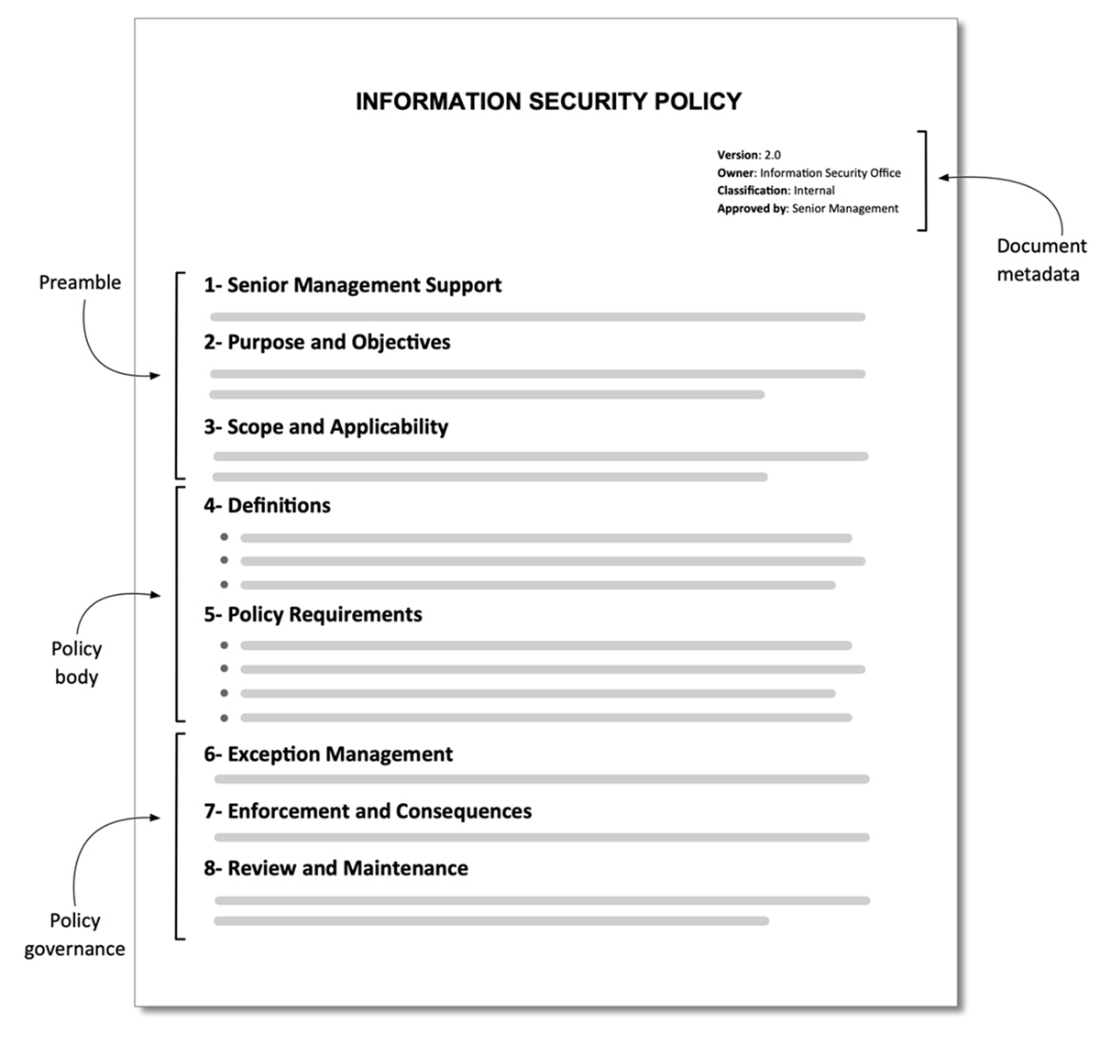
Use the policy structure diagram to inspect how authorization, requirements, enforcement, exception handling, and review fit together. section 16.2

