A security strategy coordinates asset visibility, risk evaluation, access management, and continuous improvement so cybersecurity decisions support business objectives and reduce exposure. section 6.0 section 6.6
Build the strategy around four connected activities:
- Maintain visibility into hardware, software, cloud resources, data, and third-party dependencies. section 6.0
- Assess vulnerabilities, threats, likelihood, consequences, and business effects to prioritize investments. section 6.0
- Measure security performance and refine controls as threats and business needs change. section 6.0
- Assign accountability and connect technical decisions with executive oversight, policies, regulations, and organizational goals. section 5.6.2
Acme Tech governance
At a global cloud-services company, the board oversees cybersecurity through executive reporting and measurable performance data. The CISO leads the strategy, compliance, teams, and risk communication, while analysts monitor threats, perform audits, and support incident response and forensics. section 5.6.2
Figure 5.9 The governance structure of our example company, Acme Tech
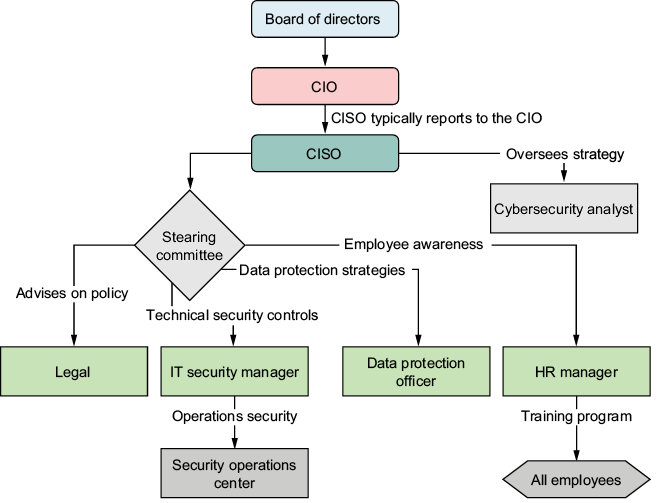
Use the governance structure to trace accountability from the board through executive leadership and operational security roles. section 5.6.2
