A seeded baseline gives every scenario a standard set of data at the start. Common reference data and default entities are already available, so scenarios need only specify custom entities for the behavior they illustrate. section 18.1 section 18.7
A seeded baseline is one way to prepare a service’s starting state:
- Unlike a clean start, it includes commonly needed entities rather than starting empty. section 18.1
- Unlike a snapshot, it provides a basic set of entities rather than a richly populated dataset. section 18.1
Shared starting data
A scenario can use reference data and default entities already in the baseline, then specify only the custom entities needed to show its particular behavior. section 18.1
Figure 18.2 The effort required to automate new scenarios depending on the quantity of data in the baseline
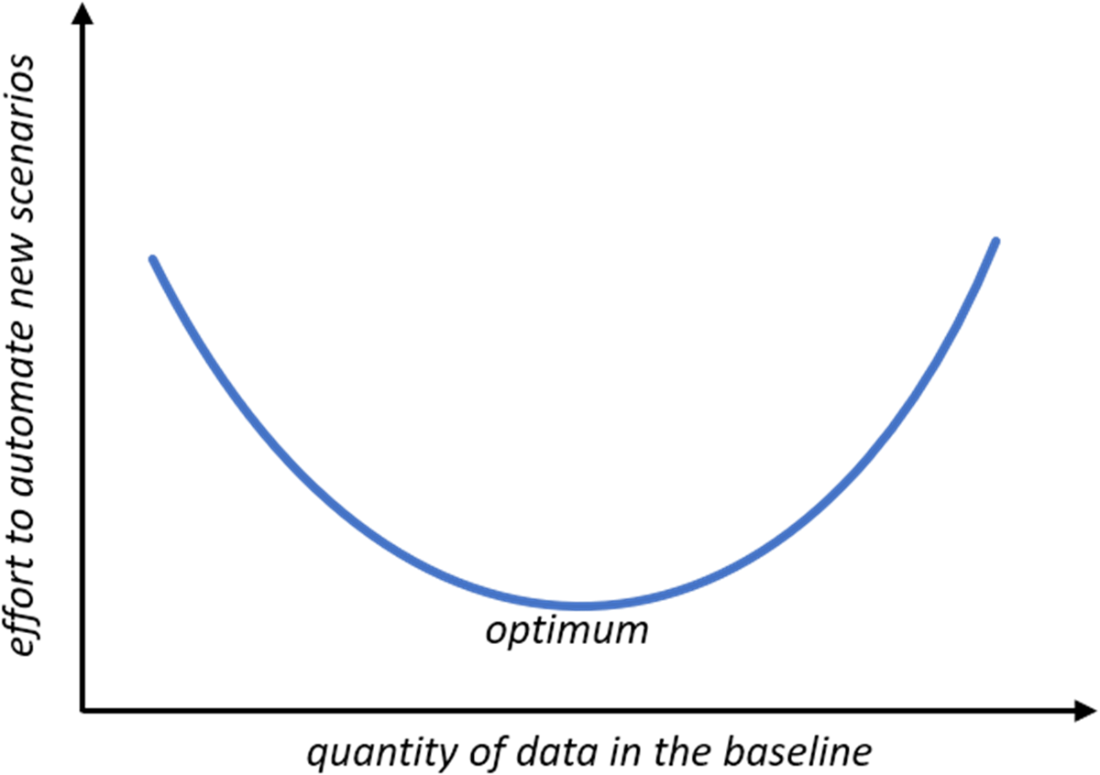
Compare how the effort to automate new scenarios depends on the quantity of data in the baseline. section 18.1
