liveBook · Manning

Self-registration

As explained in Microservices Patterns, Second Edition

Self-registration is a service discovery pattern in which a service instance registers its own network location with a service registry.

Self-registration lets a service instance invoke a service registry’s registration API to publish its network location. It may also provide a health-check URL, which the registry can check periodically; some registries require heartbeats to keep registrations from expiring. section 8.2.5

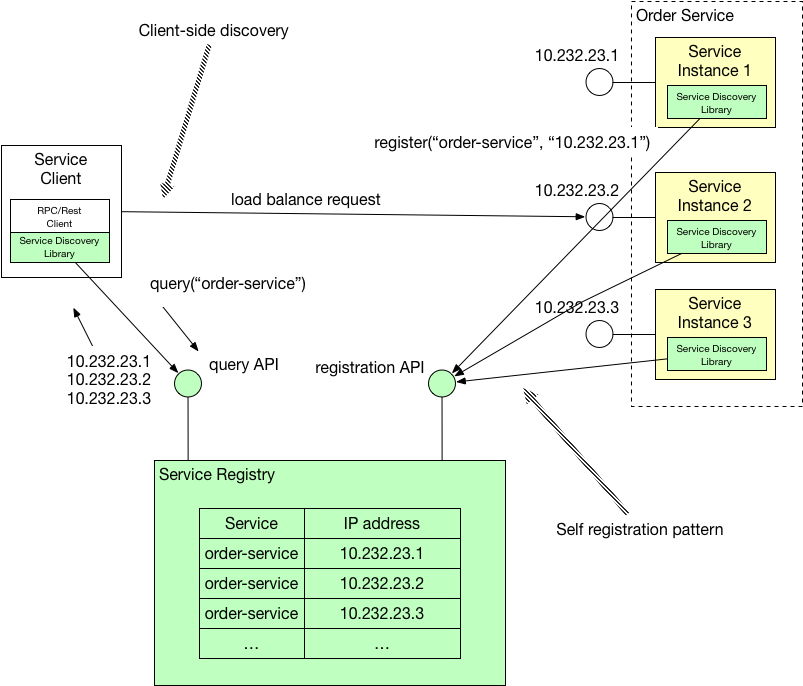
Figure 8.10 The service registry keeps track of the service instances. Clients query the service registry to find network locations of available service instances.
ApplicationLevelServiceDiscovery

Shows the registry tracking service instances and clients querying it for their network locations. section 8.2.5

How Microservices Patterns, Second Edition covers it

How deep it goes
Defines registration and describes optional health checks and heartbeats, without detailing registry API implementation.
Examples
Illustrates service instances registering network locations and optionally supplying health-check URLs.
What you can do after
Apply the pattern by invoking the registry’s registration API and, when required, sending heartbeats to keep registration active.
How it connects
Pairs with client-side discovery, where clients query the registry for instances and select one using load balancing.

Related concepts

This explainer was generated by Manning's knowledge graph from the text of Microservices Patterns, Second Edition. The section links point to the parts of the book it draws on.