Self-service data infrastructure gives domain teams a shared, domain-agnostic platform for publishing, consuming, and modifying data without lengthy central-team requests. The platform enforces agreed processes and data-protection rules while shifting routine data ownership toward the departments that understand the data. section 18.1.2
A practical division of responsibility looks like this:
- Domain teams deliver high-quality data products and satisfy the needs of consuming departments or external partners. section 18.1.2
- The data team provides technical support, governance guidance, reusable producer and consumer templates, and help with significant schema changes. section 18.1.3
- Kafka can provide a central hub for real-time exchange while centralized clusters simplify management and support self-service tools. section 18.6
From handoffs to enablement
In a traditional arrangement, a central data team collects data from every service into a data lake, often without enough domain knowledge to assess its quality. Self-service infrastructure moves routine publishing and consumption to domain teams, allowing the central team to become a center of excellence rather than continually repairing broken pipelines. section 18.1.3
Figure 18.1 The core principles of a data mesh
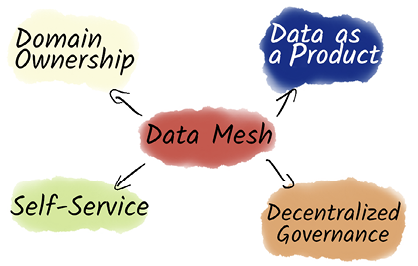
Use the data-mesh principles diagram to relate self-service infrastructure to domain ownership, data as a product, and decentralized governance. section 18.1.2
