A semantic space is a multidimensional arrangement of vector representations, called embeddings, where useful relationships between meanings appear as distances and directions. Words with similar meanings tend to be near one another, while contrasting meanings can be farther apart. The term is useful shorthand, but it is not precisely defined: it describes embeddings that behave well enough for these relationships to support computation. section 3.2.1
Adding dimensions lets representations capture more subtle relationships and multiple meanings. However, each added dimension increases storage and computation, while the possible space and training demands grow rapidly—a trade-off known as the curse of dimensionality. section 3.2.1
Figure 3.3 If you use just one number to represent a token, you quickly encounter problems where similar/dissimilar words cannot be made to fit each other. Here we see how trying to represent simple synonym/antonym relationships quickly becomes nonsensical even with just a handful of words.
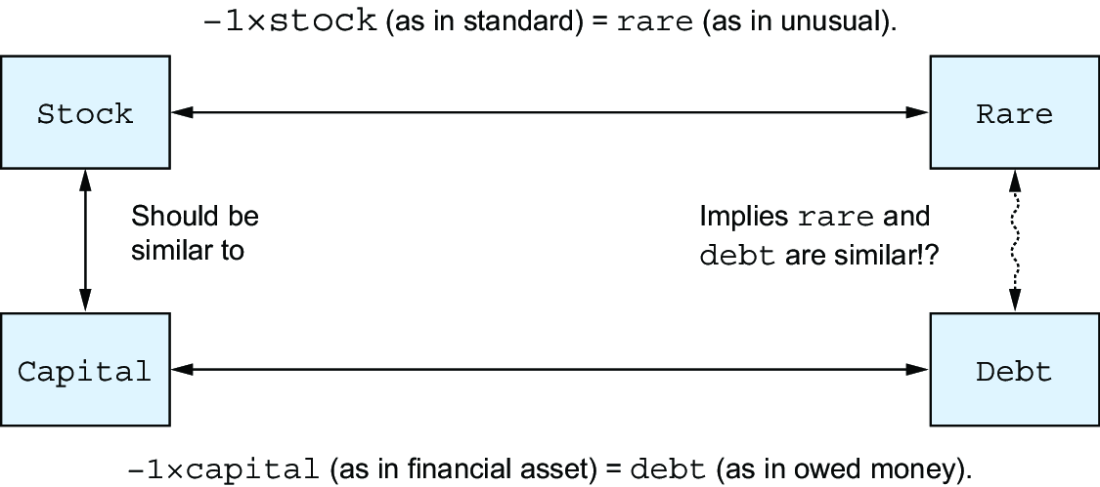
See why one number cannot arrange even simple synonym and antonym relationships consistently; additional dimensions make richer arrangements possible. section 3.2.1
