liveBook · Manning

Sequence node

As explained in AI Agents in Action

A sequence node is a behavior-tree control node that processes its child nodes in order and succeeds only when the required children succeed.

A sequence node is a behavior-tree control node that runs children from top to bottom and left to right. It succeeds only when every child succeeds; one failure stops the sequence. section 6.1.1 section 6.1

Use a sequence node to express required steps:

Posting a video to X

A root sequence can search YouTube, download transcripts, summarize them, select a video, write a post under 280 characters, review it, and publish it. Each assistant performs one ordered action. section 6.3.4

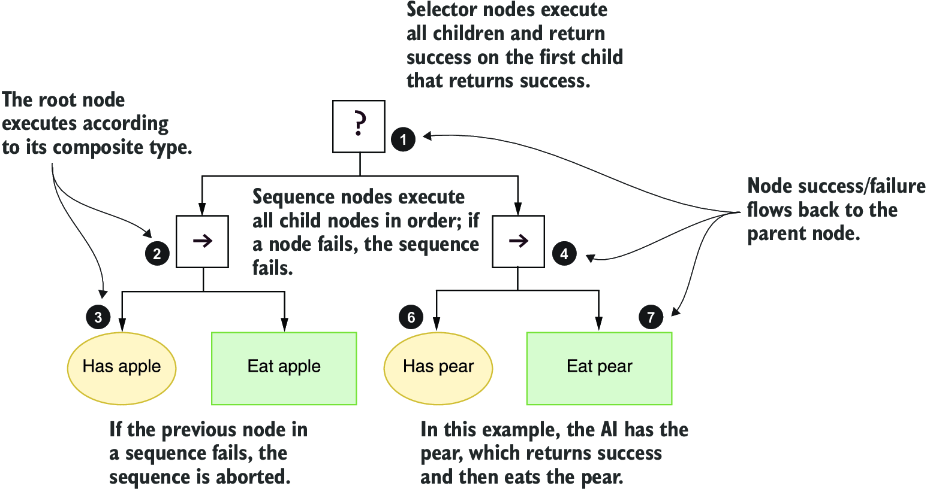
Figure 6.2 The execution process of a simple behavior tree
figure

Trace how a condition failure aborts one sequence before a selector tries another branch. section 6.1.1

How AI Agents in Action covers it

How deep it goes
Explains ordered traversal, success and failure returns, and branch abortion, then demonstrates root-level assistant coordination.
Examples
Uses apple-or-pear decisions, YouTube-to-X publishing, and conversational code debugging.
What it assumes
Introduces behavior-tree execution through selectors, conditions, actions, and success-or-failure control.
What you can do after
Apply it via Python and py_trees to build ordered assistant workflows and verify their results.
How it connects
Connects behavior trees with selector nodes, condition nodes, action nodes, and agentic assistants.

Related concepts

This explainer was generated by Manning's knowledge graph from the text of AI Agents in Action. The section links point to the parts of the book it draws on.