Sequential machine learning handles data whose observation order affects interpretation or prediction, including time series, sentences, and permutations. Tasks range from one-to-one and one-to-many mappings to many-to-one and many-to-many sequence transformations. section 11.3.3
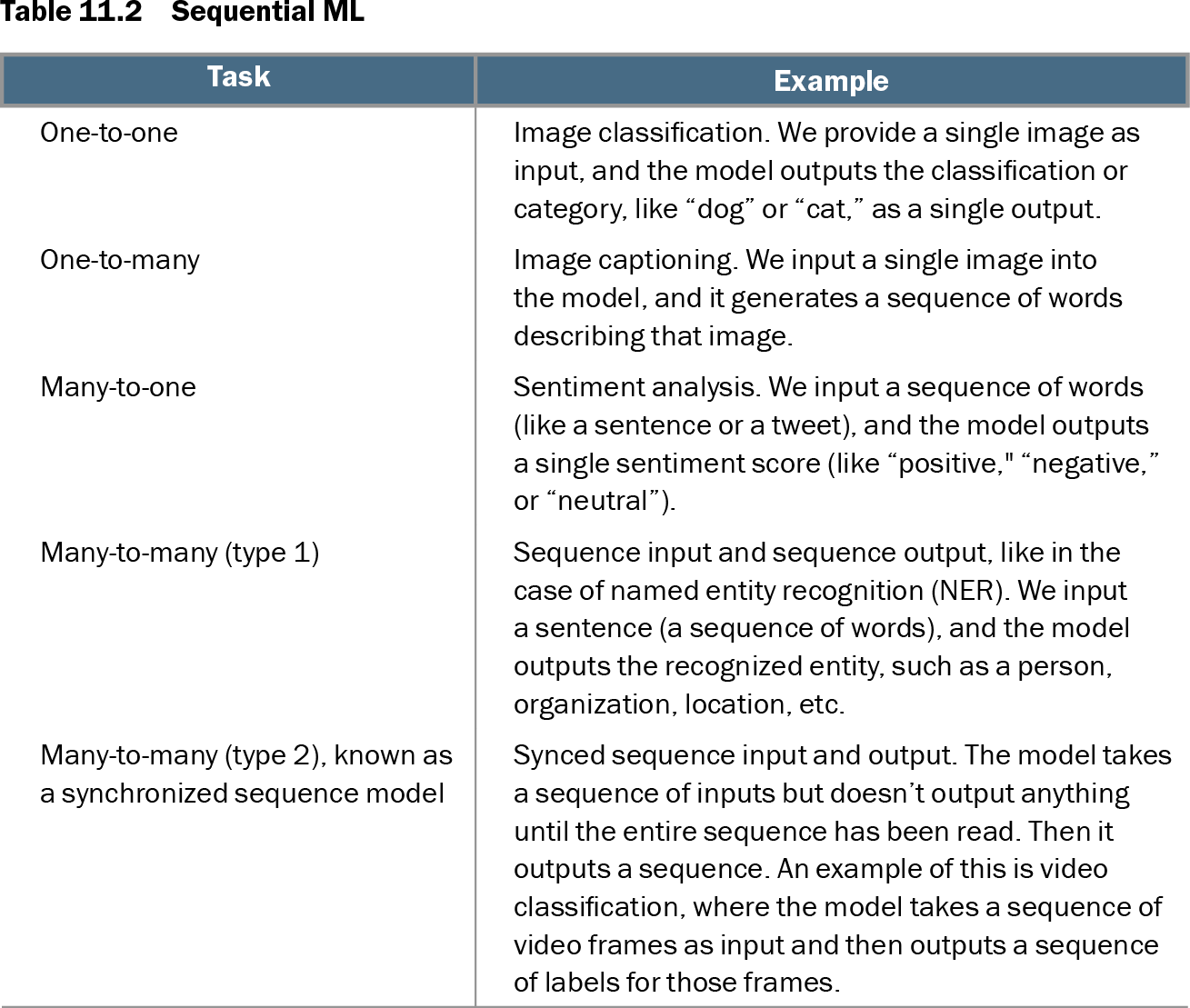
Table 11.2 Sequential ML (view table figure)
| Task |
Example |
|---|---|
| One-to-one |
Image classification. We provide a single image as input, and the model outputs the classification or category, like “dog” or “cat,” as a single output. |
| One-to-many |
Image captioning. We input a single image into the model, and it generates a sequence of words describing that image. |
| Many-to-one |
Sentiment analysis. We input a sequence of words (like a sentence or a tweet), and the model outputs a single sentiment score (like “positive," “negative,” or “neutral”). |
| Many-to-many (type 1) |
Sequence input and sequence output, like in the case of named entity recognition (NER). We input a sentence (a sequence of words), and the model outputs the recognized entity, such as a person, organization, location, etc. |
| Many-to-many (type 2), known as a synchronized sequence model |
Synced sequence input and output. The model takes a sequence of inputs but doesn’t output anything until the entire sequence has been read. Then it outputs a sequence. An example of this is video classification, where the model takes a sequence of video frames as input and then outputs a sequence of labels for those frames. |
Use the task table to distinguish sequence-learning arrangements such as image captioning, sentiment analysis, named entity recognition, and synchronized sequence prediction. section 11.3.3
Pointer networks for combinatorial sequences
Traditional sequence-to-sequence models struggle when output categories depend on variable input size. A pointer network uses attention to select members of the input sequence, supporting tasks such as sorting, travelling salesperson solutions, and convex hull construction. For a convex hull, the output polygon must enclose every point while minimizing its boundary. section 11.3.3