Serendipity is finding something valuable or interesting while looking for something else—or with no fixed target at all. Happy accidents are not pure magic: attentive systems and chance encounters can make more of them possible. section 6.6
For programmers, serendipity is a creative habit: vary what enters your field of view, leave room for informal exchange, and notice unexpected leads. It is not simply accepting whatever a recommendation algorithm serves; sameness narrows the chance of surprise. section 6.6 section 6.6.1
Create conditions for useful surprises:
- Begin a session with a random article, note, source file, or related-but-unlinked document. section 6.6.1
- Mix communities, media, and disciplines rather than relying on similar feeds or audiences. section 6.6.1
- Take genuine interest in unfamiliar hobbies and follow curiosity beyond familiar recommendations. section 6.6.2
- Let workspace materials, tools, and nearby people influence experiments, while choosing deliberately when to depart from a plan. section 7.5.2
A deliberately unplanned start
Before coding, open a random note or source file and spend a few minutes asking whether it suggests a connection, question, or experiment. Treat the result as a prompt, not a command: unexpected input still needs judgment. section 6.6.1 section 6.6.2
Figure 7.7 A peek inside Joke Raes’ atelier. The walls are decorated with her sculptures. Ample sketchbooks, manuals, and various materials are within reach, yet enough light and space remain to breathe, think, and work. Photo courtesy of Joke Raes.
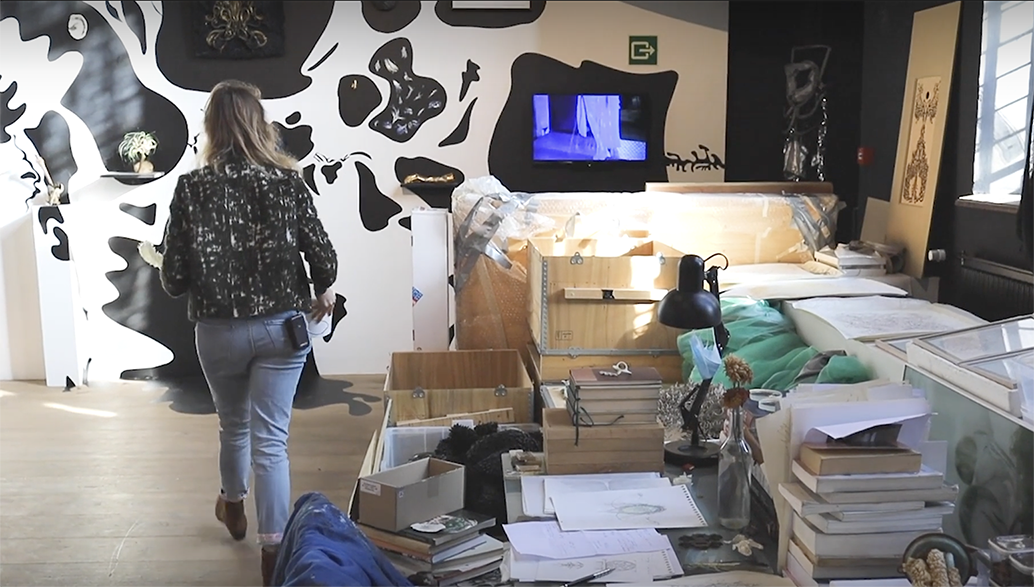
A workshop filled with varied materials, references, light, and open space illustrates how a physical environment can invite unplanned creative directions. section 7.5.2
