liveBook · Manning

Shared language architecture

As explained in Collaborative Software Design: How to facilitate domain modeling decisions

Shared language architecture is a collaborative technique for discovering and shaping the vocabulary, symbols, and metaphors that participants use to understand a domain.

Shared language architecture helps participants communicate clearly during collaborative modeling by making the words, concepts, and intentions shaping discussion explicit. section 5.3.1

Use it as part of deliberate session preparation:

  • Clarify the session goal so participants understand the intended outcome. section 5.3.1
  • Identify ambiguous or competing domain terms before they create misconceptions. section 5.3.1
  • Make differing terms explicit during collaborative modeling, then summarize the group’s shared understanding. section 5.3.1
Figure 5.6 Domain language isn’t always clean. When there are multiple words referring to the same concept, misconceptions arise because of the language. Make these terms explicit during a collaborative modeling session.
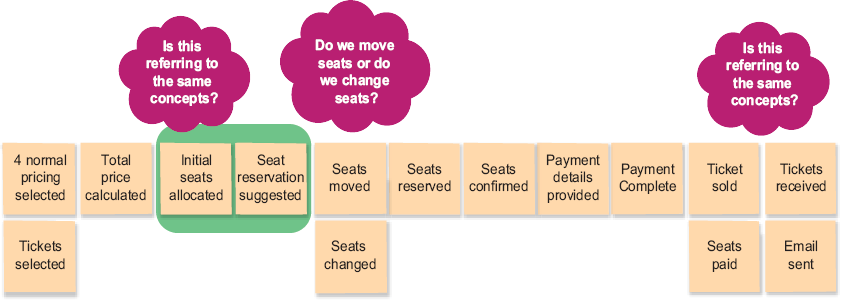
Use the figure to spot cases where several words refer to one concept and to prompt explicit terminology decisions. section 5.3.1

How Collaborative Software Design: How to facilitate domain modeling decisions covers it

How deep it goes
Defines a communication support and links it to planning, but stops short of a detailed construction procedure.
Examples
Uses messy domain language and multiple terms for one concept as prompts for clarification.
What it assumes
Assumes collaborative modeling participation and treats planning and observing competence as supports for clear communication.
What you can do after
Apply it via collaborative modeling by making competing domain terms explicit and keeping discussion focused.
How it connects
Connects collaborative modeling with facilitation, planning, observing competence, and summarizing.

Related concepts

This explainer was generated by Manning's knowledge graph from the text of Collaborative Software Design: How to facilitate domain modeling decisions. The section links point to the parts of the book it draws on.