The C header <signal.h> defines the signal-handling interface. A handled signal interrupts normal control flow and invokes a handler; after the handler returns, control resumes at the interrupted position and state. section 19.6
Choosing a signal disposition
A handler receives a signal number and can select behavior for SIGTERM or SIGABRT. For another signal, it can restore the platform’s default disposition with SIG_DFL. The constant SIG_IGN instead indicates that the signal is to be ignored. section 19.6
TAKEAWAY: C’s signal-handling interface is minimal and suited to elementary situations. The C standard distinguishes six signal numbers; platforms may define others. Using platform-specific numbers makes code less portable. section 19.6
Figure 19.3 Control flow after an interrupt return jumps to the position where the interrupt occurred
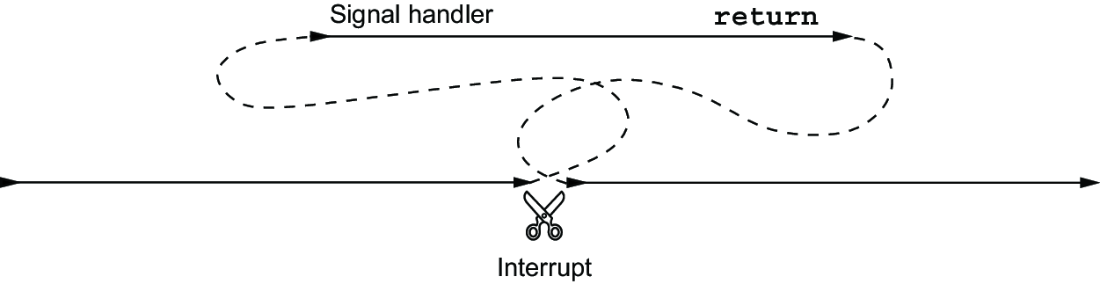
Follow the interruption, handler execution, and return to the interrupted control flow. section 19.6

