Prediction averaging
Prediction averaging is an aggregation technique that combines multiple numerical values or predictions by computing their arithmetic mean.
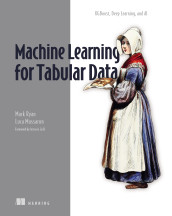
Machine Learning for Tabular Data: XGBoost, Deep Learning, and AI
An averaging ensemble combines predictions from multiple models by averaging their outputs or taking a majority vote.
- How it is used
- Improves tabular-data predictions by combining diverse models and reducing the variance of their estimates.
- How deep it goes
- Explains averaging, voting, sampling variants, variance-bias trade-offs, and computational cost without deriving ensemble internals.
- Examples
- Uses pasting, bagging, random subspaces, random patches, and a scikit-learn bagged tree classifier with reported accuracy.
- What you can do after
- Apply it via BaggingClassifier or BaggingRegressor and evaluate accuracy, variance reduction, bias, and computational cost.

Outlier Detection in Python
Score averaging is the aggregation of multiple detector scores or scores obtained under multiple parameter values by computing their mean.
- How it is used
- Uses score aggregation to make outlier detection less sensitive to parameter choices and detector-specific behavior.
- How deep it goes
- Explains parameter and detector aggregation with concise implementation patterns, but stops short of formal ensemble analysis.
- Examples
- Uses KNN scores across five k values, six-detector combinations, score dataframes, and MinMaxScaler.
- What you can do after
- Apply it via detector score collection, normalization, and aggregation across parameters or detectors.
Read how Outlier Detection in Python explains prediction averaging →
Related concepts
- baggingused by · Bagging, or bootstrap aggregation, is an ensemble technique that trains multiple models on bootstrap samples of data and combines their predictions.
- varianceaddresses · Variance is the expected squared deviation of a random variable from its mean, measuring the spread of its distribution.
- max aggregatoralternative to · A max aggregator combines multiple vectors by selecting the maximum value independently in each feature dimension.
- model aggregationimplements · Model aggregation combines predictions from multiple predictive models into a single output, often by averaging them.
- pastingincludes · Pasting is an ensemble technique that trains models on subsets sampled without replacement and combines their predictions.
These guides are generated from the text of Manning books by Manning's knowledge graph and link to the sections they draw on. The full books are available on liveBook and at manning.com.