Simultaneous multithreading (SMT), also called hyperthreading, lets multiple threads execute concurrently on one physical CPU core. The core duplicates architectural state, including registers and program counters, but shares execution resources. The operating system sees multiple logical cores where there is one physical core. section 2.3.2
SMT can increase throughput, but logical cores compete for execution units, memory bandwidth, and caches. A resource-intensive thread can stall another thread on the same physical core. That contention makes SMT a potential source of latency variance, particularly when tail latency matters. section 2.3.2
When reasoning about concurrent threads, distinguish three ways they make progress:
- On a single core, the operating system can switch between threads, making their progress appear simultaneous. section 9.1
- On separate physical cores, threads can execute in parallel without sharing a core. section 9.1
- With SMT, threads execute concurrently on logical cores that share one physical core. For ultra-low-latency applications, consider disabling SMT when its contention outweighs its throughput benefit. section 2.3.2
Figure 9.1 Concurrency versus parallelism. Concurrent execution (on the left) interleaves thread execution on a single core, which provides an illusion of work happening at the same time because all threads make some progress quickly. In contrast, parallel execution (on the right) executes the threads simultaneously on different cores, providing true parallel execution.
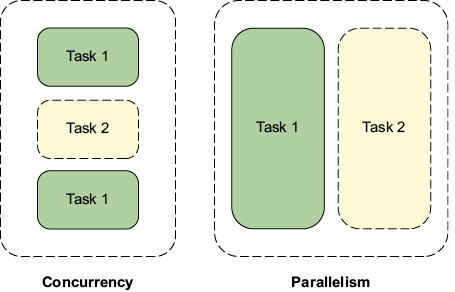
The figure contrasts interleaving on one core with execution on separate cores. SMT adds a different case: concurrent threads on one core with shared execution resources. section 9.1 section 2.3.2
