liveBook · Manning

Single-piece flow

As explained in Build High Value Software Systems

A production approach in which one item moves through the system at a time so defects can be detected and corrected before the next item is produced.

Single-piece flow moves one change through the software workflow at a time: commit a small change, run tests, learn from the result, and adjust before moving on. section 5.4.2

Reliable, immediate feedback supports this flow. When tests are flaky, teams may batch changes to avoid repeated CI delays; failures then become harder to diagnose, and cycle time grows less predictably. section 5.4.2

Flaky CI and larger commits

A developer who delays pushing until several changes accumulate faces a harder question when CI fails: which change caused it? Smaller changes make each failure easier to investigate. section 5.4.2

Figure 5.5 Variability widens cycle time and shifts teams from single-piece flow to batching.
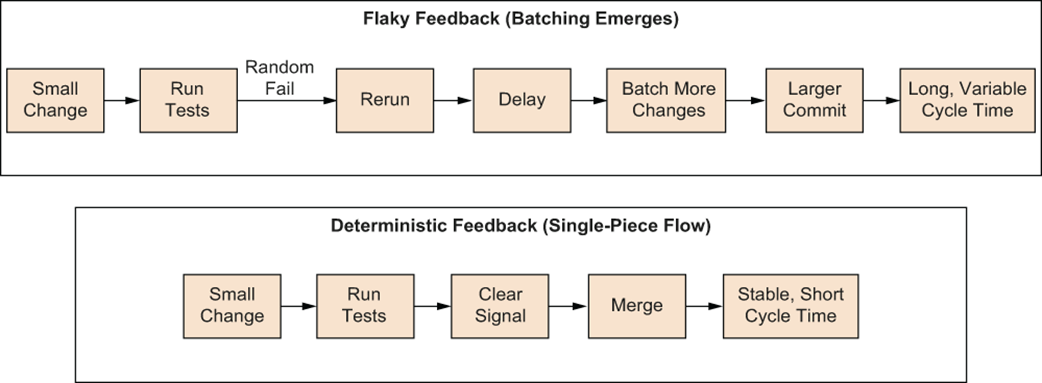
Shows how feedback variability can encourage batching, widen cycle time, and increase diagnostic complexity. section 5.4.2

How Build High Value Software Systems covers it

How deep it goes
Defines the software practice and traces how flaky feedback encourages batching and complicates failure diagnosis.
Examples
Uses small commits, test runs, CI delays, and failures among multiple accumulated changes as examples.
What you can do after
Apply it by committing small changes, testing promptly, and adjusting from immediate feedback.
How it connects
Connects single-piece flow with Lean manufacturing, flaky tests, continuous integration, cycle time, and lead time.

Related concepts

This explainer was generated by Manning's knowledge graph from the text of Build High Value Software Systems. The section links point to the parts of the book it draws on.