A single-response question lets a respondent select exactly one answer from a defined set, such as a dropdown or scale. Small changes in wording or presentation can shift the responses received. section 6.2.2
Common uses and considerations include:
- Use Likert scales to capture one level of agreement, such as “Strongly Disagree” through “Strongly Agree.” section 6.2.2
- Distinguish single-response questions from multiple-response and ranking questions, which capture different kinds of preferences. section 6.2.2
- Treat additional scale granularity cautiously; finer distinctions help only when participants can meaningfully use them. section 6.2.2
Net Promoter Score
An NPS question uses an 11-point single-response Likert scale and may be followed by a free-text question asking why the respondent chose that answer. Organizations use the results to track NPS over time and interpret supporting positive or negative comments. section 6.2.2
Figure 6.6 Varying methods of presenting the same response format
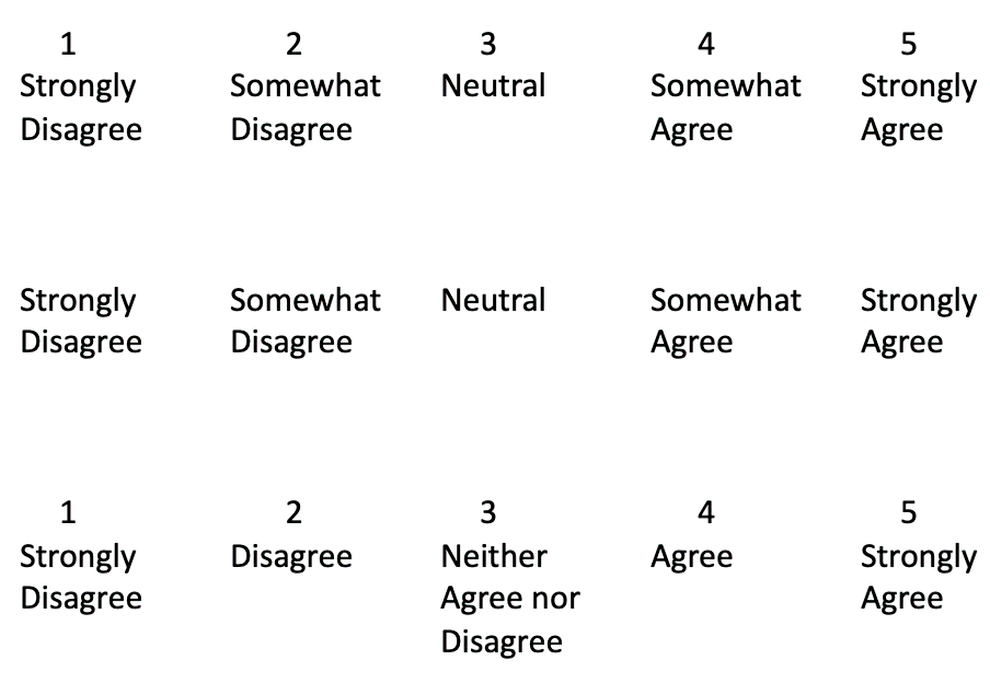
Compare different presentations of the same single-response format. section 6.2.2
