A small change limits work to an independently manageable slice that can be reviewed, tested, and delivered quickly. Smaller slices reduce work in progress, expose problems earlier, and keep customer value moving through the delivery loop. section 1.2
Use small changes to keep delivery useful and responsive:
- Deliver a basic version when it is useful, then add complexity after feedback rather than waiting for a complete system. section 2.5
- Break large tasks and reviews into smaller units; a 2,000-line change might become ten reviews of about 200 lines. section 5.1.1
- Keep developers, testers, operations, and customers connected so feedback can guide the next increment. section 1.2
A demo-ready endpoint
A minimal Go service exposes /hello, returns a fixed JSON response, and is committed and pushed through an automated pipeline. A UI can begin integration immediately, while dynamic behavior is added later. section 2.5
Figure 1.4 Product development goes through a life cycle that starts with raw materials and results in a product that customers provide feedback on, resulting in improvements and changes to the product.
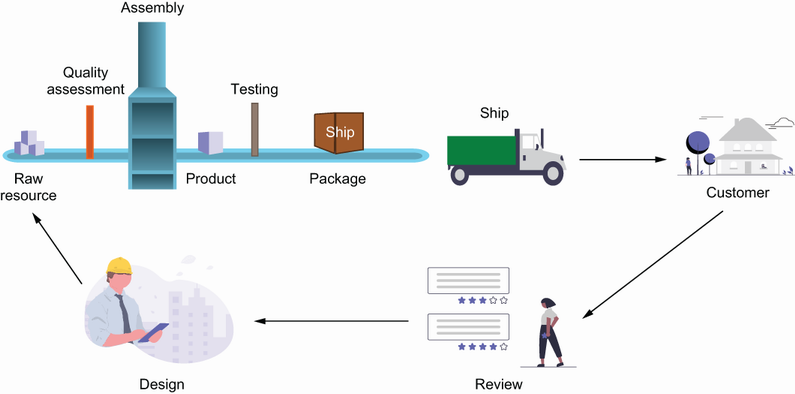
Follow the product loop from ideas and implementation through delivery, customer feedback, and subsequent improvements. section 1.2

