The integration layer bridges business activities and technology interfaces. It translates domain-level actor activities into exact interactions with the system under test and manages the clients that perform them, such as HTTP clients and web browser drivers. section 14.4 section 15.2
Typical integration-layer responsibilities include:
- Connecting domain activities to web interfaces, mobile applications, and programmatic APIs such as REST or GraphQL. section 15.2
- Identifying interactable elements, setting up test data, producing test reports, and integrating with test tools. section 14.2.1
- Integrating with the test execution environment, test infrastructure, and the people and processes that run tests and analyze results. section 15.2
Keep low-level interactions out of specifications
A maintainable test keeps business-facing workflow steps in the Specification and Domain layers, then delegates browser-driver or HTTP-client details to the integration layer. Calling Selenium WebDriver APIs directly from a specification couples the workflow to a specific interface and tool, making later techniques such as blended testing harder to introduce. section 14.2.1 section 14.4
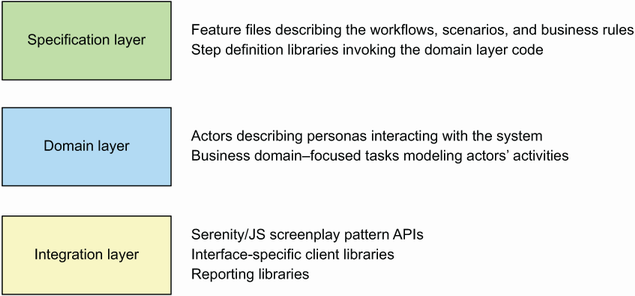
Use the layer diagram to locate the integration layer beneath the Domain and Specification layers and see the technologies and responsibilities assigned to it. section 14.2.1
