Snapshot-and-stream migration moves data from a legacy monolith to a new microservice in two phases: copy existing records, then synchronize later changes until both systems match. section 12.5.2
The workflow pairs:
- Snapshot: make a one-time bulk copy of historical data, using export tools such as pg_dump or AWS DMS. section 12.5.2
- Stream: capture and replay changes made after the snapshot begins. Options named include Change Data Capture (CDC) and application-level syncing. section 12.5.2
Billing migration
A new Billing microservice needs historical credit-card data from the monolith. Copy the existing records, then synchronize ongoing changes before switching over. section 12.5.2
Figure 12.4 The Strangler Fig Migration. Instead of a risky "Big Bang" rewrite, an API Gateway incrementally reroutes traffic to the new Microservice, while Change Data Capture (CDC) safely syncs the underlying data in the background.
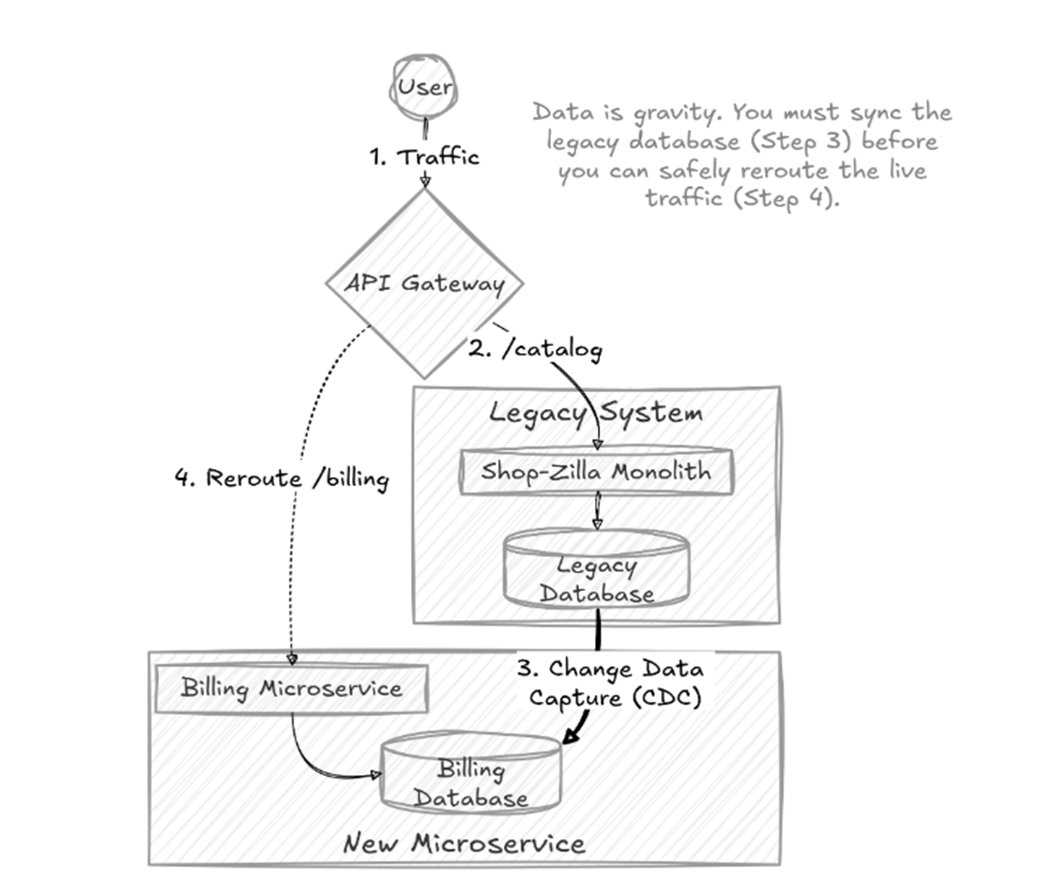
See how incremental traffic rerouting and background CDC fit into a Strangler Fig migration. section 12.5.2
