What makes a solution creative: the author’s confidence, or someone else’s response? A social verdict treats creativity as a judgment conferred by people in a domain. An idea or work counts as creative when others recognize it that way; its maker cannot settle the question alone. Creativity is therefore sociocultural and depends on context rather than being an isolated property lodged inside a person or artifact. section 1.1 section 9.1
In programming, teammates may praise an unusual workaround as creative because they understand the problem and the field. Another team, company, or time may find the identical solution routine. Recognition relies on evaluators with relevant knowledge, much as non-specialists may rely on art experts when deciding whether a painting matters. section 1.1 section 5.6
A solution that must be understood
Suppose a programmer produces a clever but opaque piece of code. If nobody can understand it, it may not be recognized as creative. Rather than demanding admiration, treat that response as a prompt to communicate or simplify the work. Critical responses are part of the verdict, not merely obstacles after the idea is finished. section 5.6
This does not make creativity a fixed talent reserved for celebrated individuals. The verdict concerns whether work is recognized as creative, while creative ability can be learned and developed. Because creativity involves interconnected relationships, turning it into a rigid checklist of “best practices” risks missing the surrounding situation. section 9.1
Use the idea as a practical habit:
- Share work with people able to assess the relevant problem and conventions. section 1.1
- Invite critical questions and verification after developing an idea, not only during it. section 5.6
- Expect different audiences to judge the same solution differently, and decide how much nonconformity you want to pursue. section 1.1 section 5.6
Figure 1.1 What is art? According to Marchel Duchamp, a signed urinal can be art. A New York gallery rejected it. Duchamp’s Fontaine did manage to shake things up quite a bit in the domain of 20th-century art. It is now considered highly creative. Source: public domain.
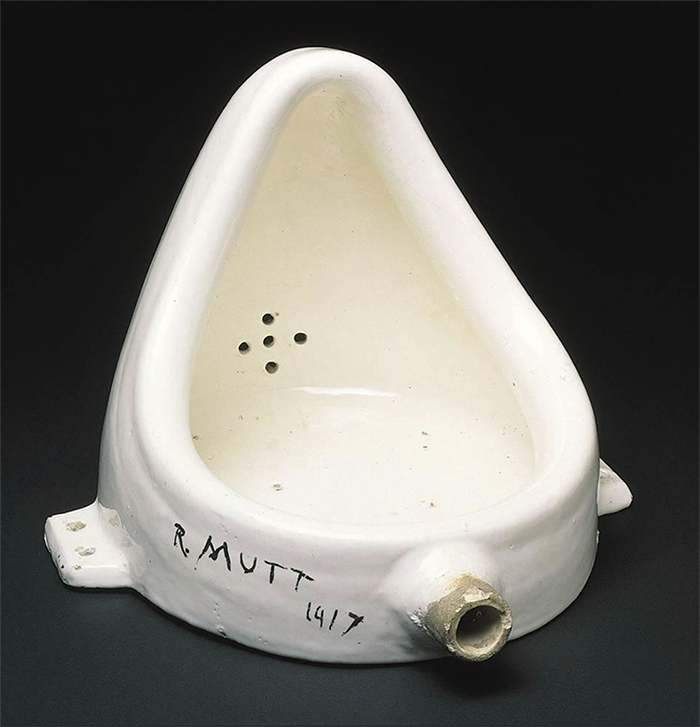
Duchamp’s Fontaine illustrates how rejection, later recognition, and a changed cultural setting can alter a work’s creative standing. section 1.1
