A socio-technical architecture pattern treats architecture as more than technologies and software patterns. It connects technical design with organizational structures, team responsibilities, business domains, and working practices. The aim is to improve outcomes such as value, speed, safety, quality, and team autonomy rather than optimize technology in isolation. section 1.1 section 1.5
Microservices and team autonomy
Netflix’s move toward microservices illustrates the pattern. Microservices can provide technical decomposition, but their organizational benefit comes from distributing responsibility to teams so they can make decisions, release software, and reduce coordination. The pattern does not make microservices universally correct; the same socio-technical reasoning can guide other architectural styles. section 1.1
Apply the pattern by examining architecture and organization together:
- Shape independent value streams that connect business domains, team responsibilities, and technology capabilities. section 1.5
- Use Team Topologies to validate whether team boundaries support fast flow or create coordination bottlenecks. section 11.0
- Challenge dependencies and evolve the arrangement continuously instead of pursuing a fixed target state or one-time reorganization. section 11.4
Figure 1.3 Better Value Sooner Safer Happier. (Source: Smart et al., Sooner Safer Happier: Antipatterns and Patterns for Business Agility [Portland, OR: IT Revolution 2020])
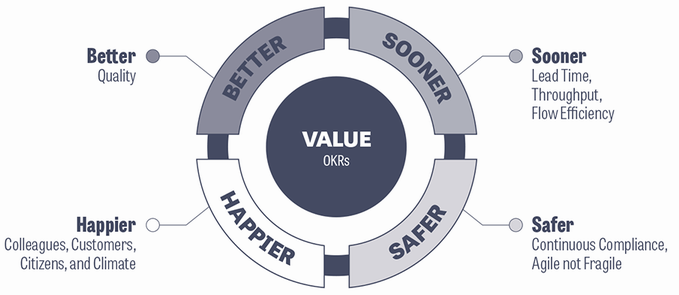
Use the Better Value Sooner Safer Happier model to discuss how architectural choices contribute to organizational performance and long-term prosperity. section 1.1
