A software architect is not necessarily a distant decision-maker with a whiteboard. Choosing where logic belongs, how to structure a class, or how to query a database already involves architectural decisions. The role is about making those choices deliberately, not holding a special title. section 1.1
There is no perfect design without downsides. Architectural choices cost time, money, team energy, customer happiness, or future flexibility; shortcuts also create technical debt. The practical goal is to choose tradeoffs the team can live with and explain why. section 2.2
Make architectural choices defensible:
- Identify the constraints and likely costs of each option. section 2.2
- Choose the downsides the team can accept now, rather than chasing a design with no weaknesses. section 2.2
- Track results with measures such as maintenance time, bug rates, onboarding time, incidents, or feature delivery time. section 2.2
Figure 2.1 Archie sees the mirage of perfect architecture in the distance. He desperately tries to crawl towards it, not realizing it’s a figment of his imagination.
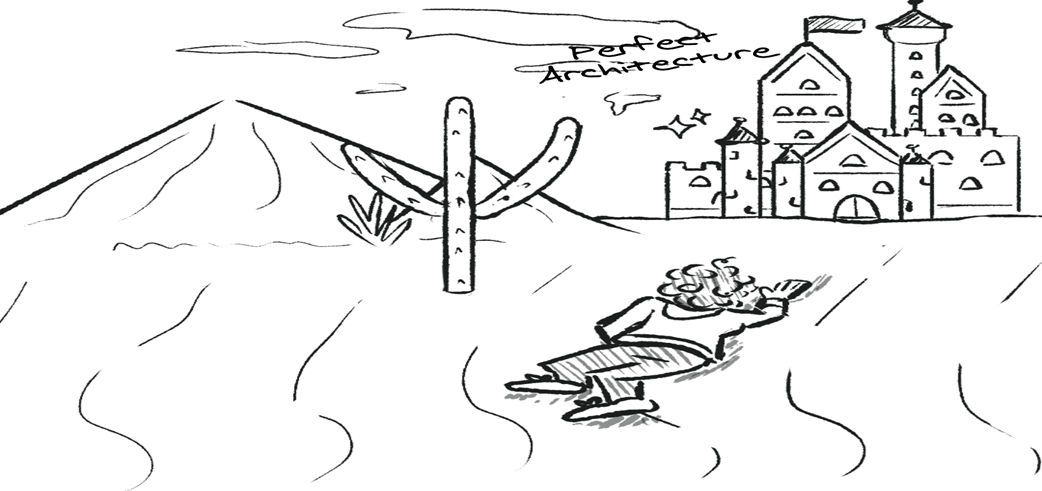
The mirage of a perfect architecture captures the trap: chasing an ideal design can keep a team refactoring instead of shipping. section 2.2


