The software development life cycle (SDLC) is a repeating, measurable process for moving software and platform changes from planning toward production. It makes dependencies, acceptance criteria, feedback, and delivery work explicit rather than leaving them to improvised handoffs. section 2.2.1 section 3.2.1
A practical lifecycle organizes work into connected stages:
- Plan work against the roadmap, identify dependencies, divide changes into small increments, prioritize them, and define measurable success criteria. section 2.2.1
- Design the architecture and acceptance criteria while preserving the ability to pivot; define experiments when evidence is needed before full implementation. section 2.2.1
- Code against the agreed criteria, beginning with automated tests so misunderstandings surface before implementation and confirmation bias does not weaken coverage. section 2.2.1
- Build and test changes through an automated pipeline rather than applying them manually across environments. section 2.2.1
- Map the complete path to production, including operational work, dependencies, handoffs, delays, and support activities. section 3.2.1
Platform capability change
A platform team plans a new capability by splitting it into incremental releases, defining measurable acceptance criteria, and identifying dependencies. It designs a small experiment, writes automated tests before implementation, and moves the change through an automated build-and-test pipeline. Value stream mapping then exposes delays in infrastructure requests, reviews, or support so the team can measure improvement. section 2.2.1 section 3.2.1
Figure 2.7 The software delivery lifecycle covers all stages from feature planning through running in production.
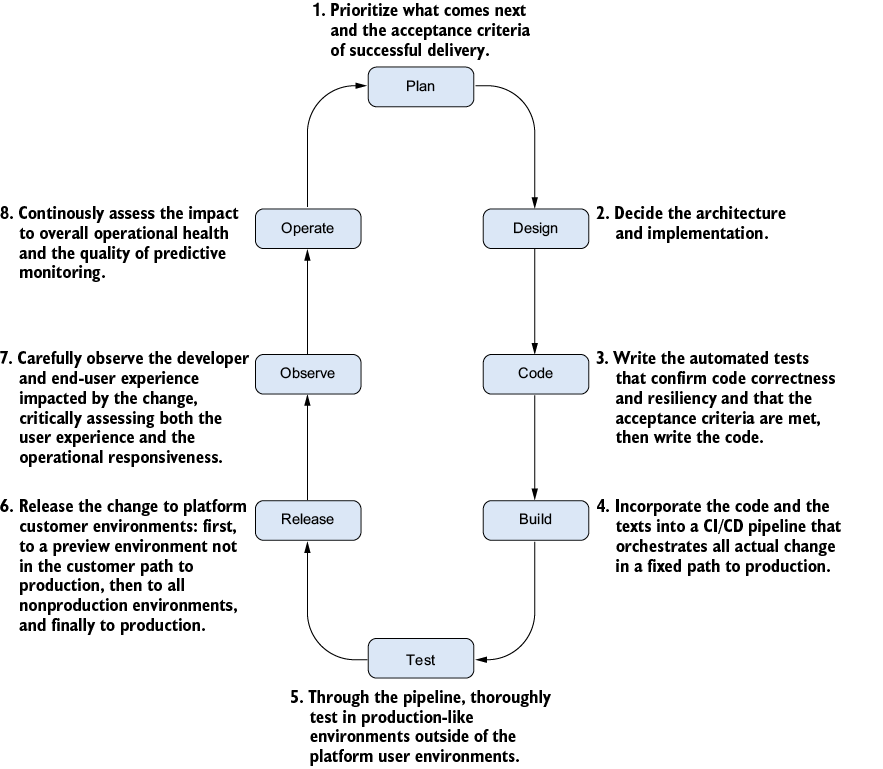
Use the lifecycle diagram to navigate the stages from feature planning through running in production. section 2.2.1

